

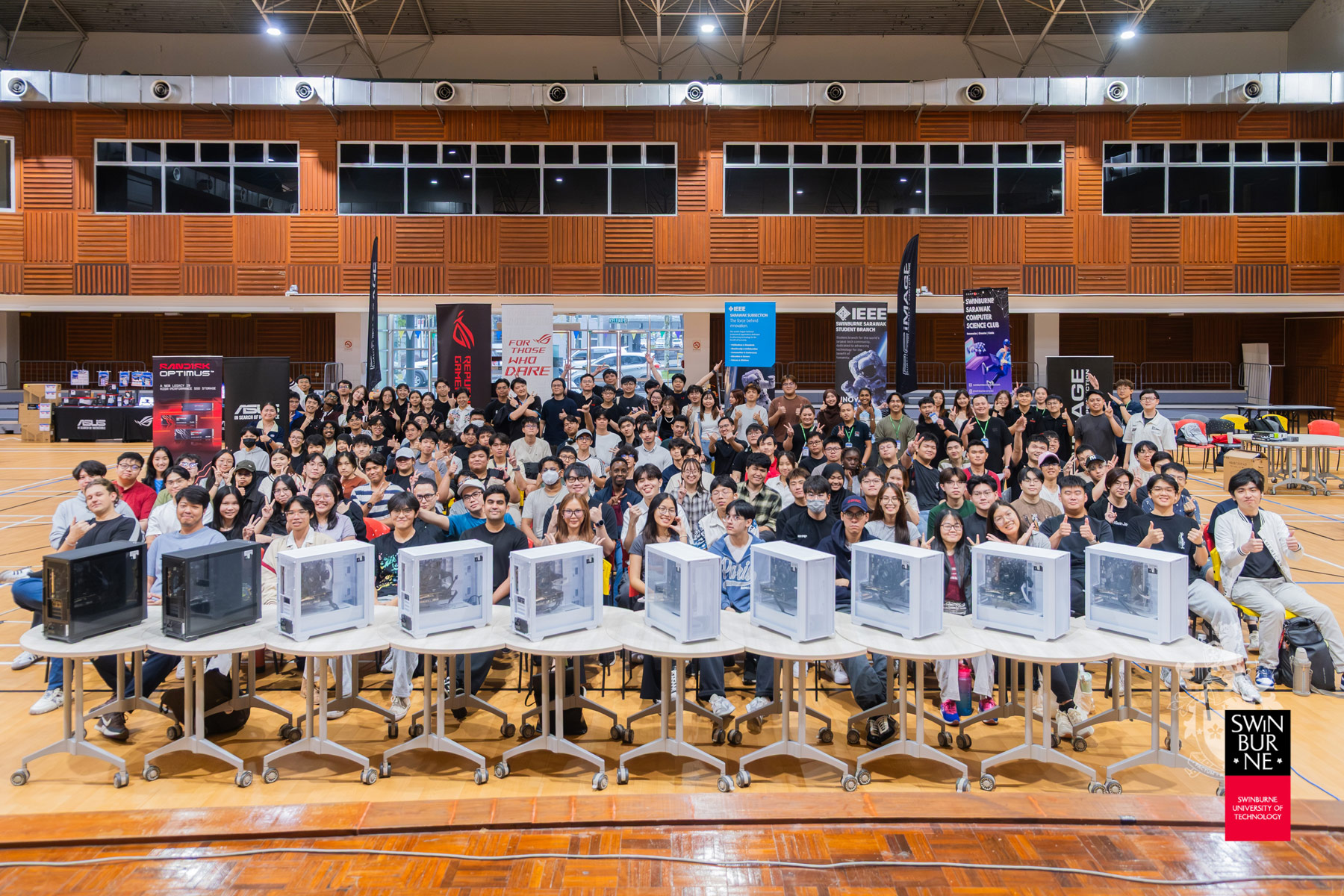
KUCHING – Swinburne University of Technology Sarawak Campus, in collaboration with ASUS Malaysia, SanDisk, PC Image, and the Institute of Electrical and Electronics Engineers (IEEE) Sarawak Subsection, successfully hosted “Master Your Build: PC DIY Workshop” – a large-scale hands-on technology event believed to be among the largest single-session PC-building workshops ever held in Sarawak and potentially one of the largest of its kind in Malaysia.
Held on 13 May 2026 by the university’s School of Information and Communication Technologies (SoICT) and Faculty of Engineering, Computing, and Science, the workshop brought together 135 student participants in an effort to strengthen practical digital competencies among Sarawakian youth.
The event transformed Swinburne Sarawak’s Multipurpose Hall into a lively technology showcase, where students rotated between 10 dedicated assembly stations and gained rare direct exposure to modern desktop computer assembly using premium consumer-grade and gaming components, while exploring the latest PC technologies and industry trends.
The workshop began with a comprehensive introduction to the core components that make up a modern desktop computer, including processors, motherboards, graphics cards, memory, storage technologies, and cooling systems. The session was led by Kee CM, ASUS Malaysia Marketing Representative (DIY PC), and Wong Yen Lin, SanDisk Senior Sales Manager, with technical facilitation and support provided by Andrew Koon and the team from PC Image. The industry representatives also shared insights into current consumer technologies and market trends shaping today’s computing landscape.
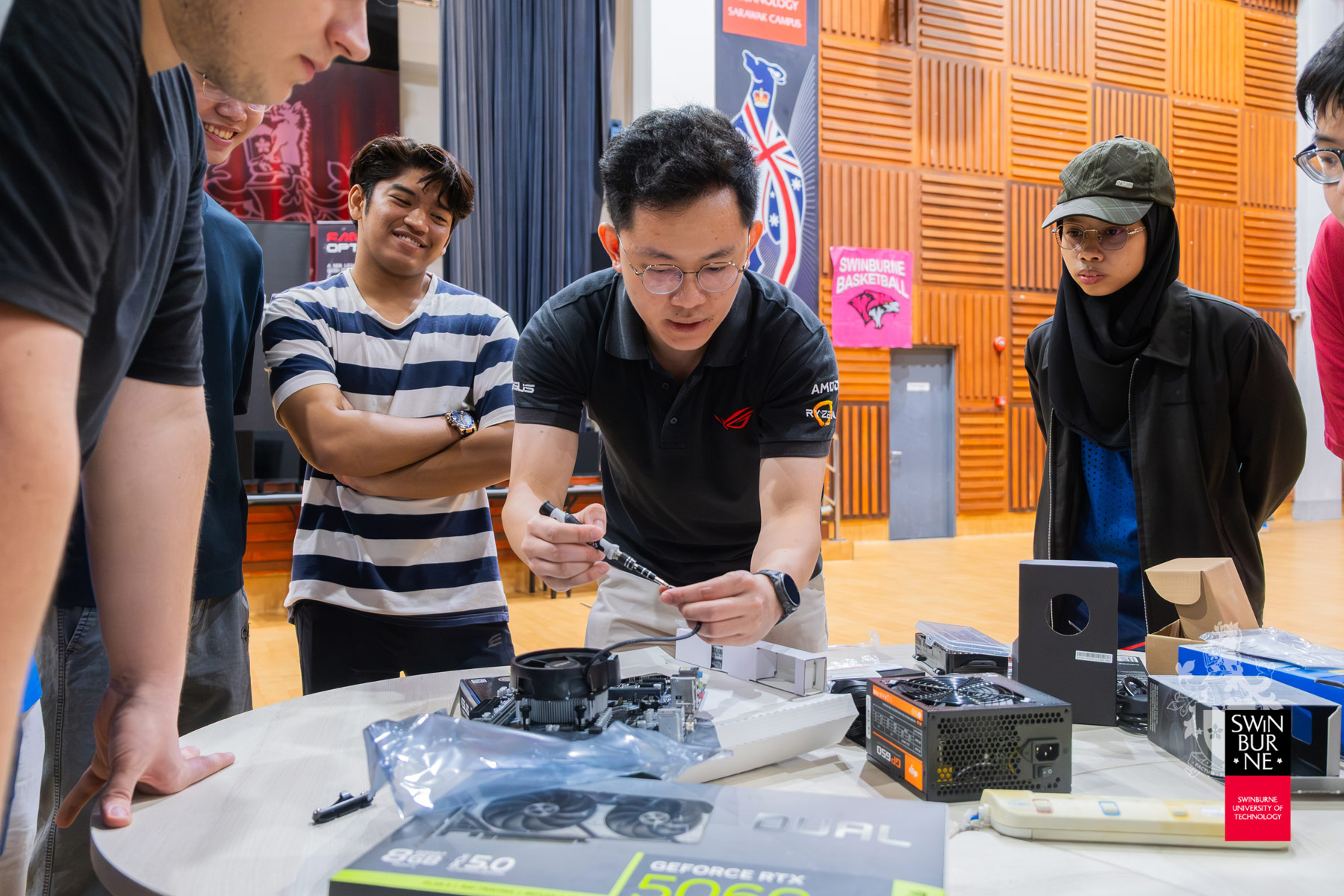
Student participants observe a demonstration.
Participants were then divided into groups of about 10 students per station, where trainers guided them through the physical assembly of a complete desktop PC. Students had the opportunity to handle components directly and take turns performing installation procedures by hand, including mounting hardware and connecting system components.
To complete the experience, the assembled systems underwent Power-On Self-Test (POST) verification using monitors, keyboards, and mice provided by the Internet of Things (IoT) Laboratory at Swinburne Sarawak, allowing participants to observe whether their systems were successfully built and operational.
The program concluded with a lucky draw session featuring over 20 gifts contributed by ASUS Malaysia, including exclusive ASUS ROG merchandise, alongside special promotional deals and vouchers offered through PC Image. Participants were also entered into an additional online lucky draw for ASUS ROG gaming mice.
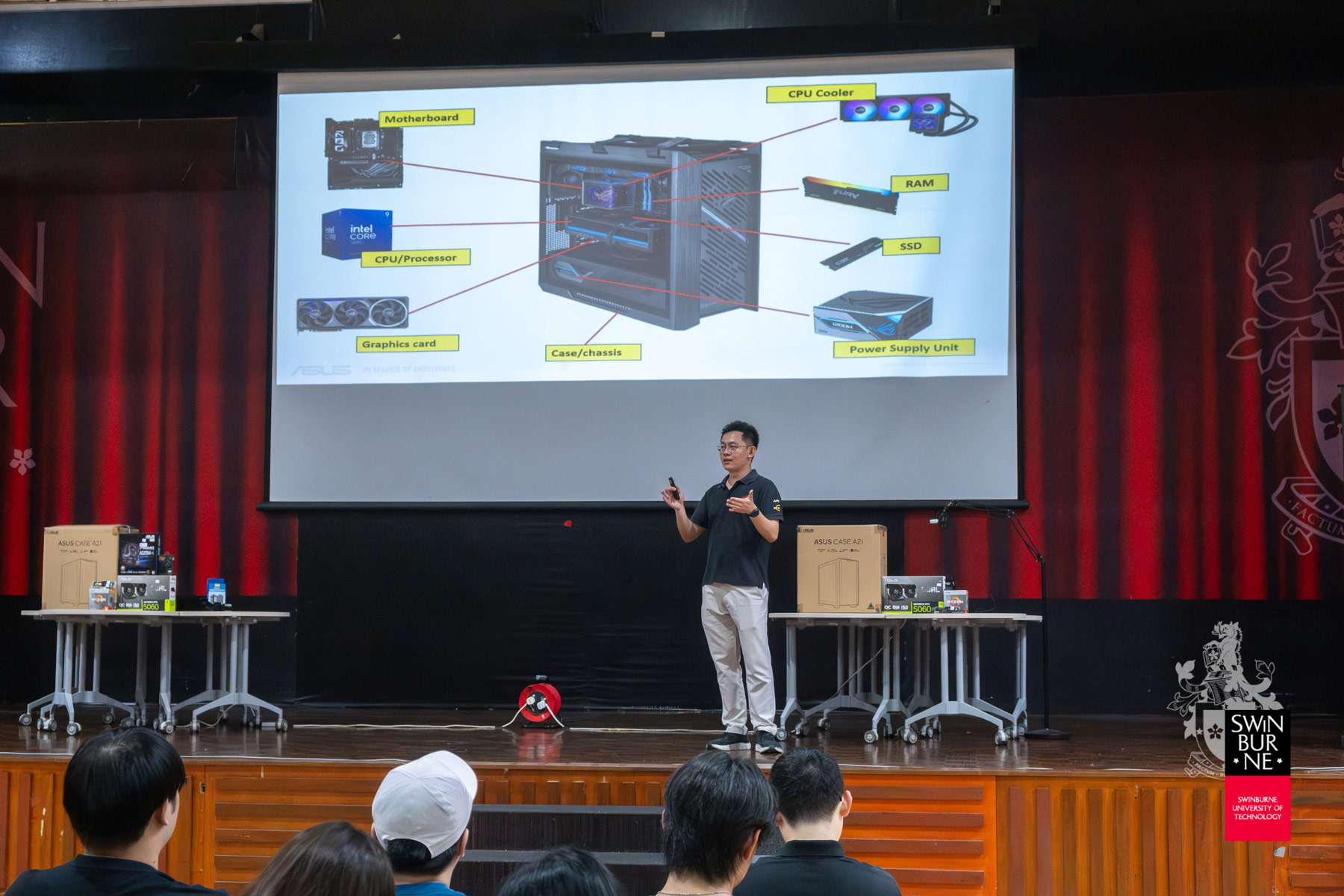
Kee CM from Asus introduces participants to the core components that combine with a motherboard to form a working desktop computer.
According to the event organisers, the overwhelming response from participants demonstrated the growing enthusiasm among students for experiential and tactile learning opportunities that complement traditional classroom education.
Dr Mark Tee Kit Tsun, Head of Department for Computer Science (Software Development and IoT) at Swinburne Sarawak and one of the initiative’s key organisers from IEEE Sarawak Subsection, described the workshop as part of a broader effort to scaffold classroom learning with meaningful real-world technical experience.
“Computer systems and hardware architecture are often taught theoretically through lectures and diagrams. However, there is something transformative about physically touching the components, understanding their scale, troubleshooting installation issues, and finally witnessing a successful boot-up sequence. We wanted students to develop not only technical knowledge, but also the confidence, curiosity, and sense of ownership over technology itself,” he said.
Dr Fu Swee Tee, Swinburne Sarawak’s SoICT organising chair for the event, added that the initiative was especially meaningful in the context of Sarawak’s expanding access to tertiary education.
“As more local students gain opportunities to pursue higher education through initiatives such as the Free Tertiary Education Scheme (FTES), universities and industry partners must continue creating experiences that bridge academic learning with practical exposure. Workshops like this help cultivate technical competency, lifelong learning habits, and enthusiasm for digital technologies within our communities,” she said.
Student feedback following the workshop was highly positive, with many participants citing the opportunity to assemble a computer first-hand and handle premium hardware as among the most memorable aspects of the experience.
Several participants also hoped that future editions could expand further with additional assembly stations, smaller working groups, and more advanced sessions involving operating system installation and software configuration to provide a complete end-to-end PC-building experience.
The initiative reflected Swinburne Sarawak’s ongoing commitment to cultivating industry-ready graduates and advancing digital upskilling within local communities. ASUS Malaysia, SanDisk, and PC Image were recognised for their dedication to supporting digital education, technology accessibility, and community engagement amid ongoing market uncertainties and global hardware supply challenges.
The event also highlighted the strong collaboration between academia, industry partners, campus facilities, and student volunteers, particularly through the efforts of Swinburne Sarawak’s Computer Science Club and IEEE Student Branch, united by a shared vision of bridging the digital divide and nurturing a technologically adept Sarawak.
The organisers expressed hope that “Master Your Build” could evolve into a recurring flagship technology outreach initiative for Sarawak, inspiring future generations of students to pursue careers and lifelong interests in computing, engineering, and digital innovation.
For more information on Swinburne Sarawak, visit its website, Facebook page (@swinburnesarawak), Instagram page (@swinburnesarawak), LinkedIn page (Swinburne University of Technology Sarawak Campus), X page (@Swinburne_Swk), TikTok page (@swinburnesarawak), YouTube channel (Swinburne Sarawak), or Xiaohongshu page (@SwinburneSwk).