

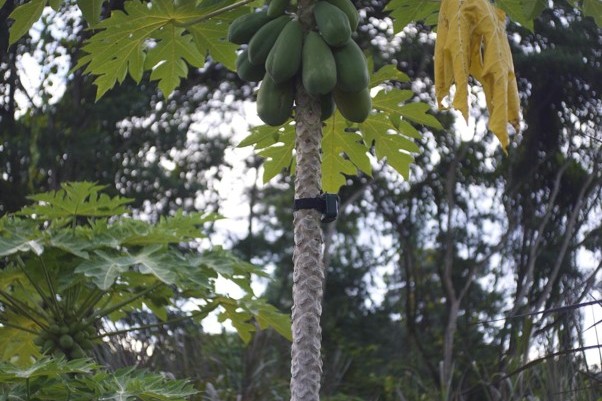
The Fieldwork: Bioacoustics in Two Sarawak Sites
Abigail Wee and Chin Xiang Keat, both recent Bachelor of Science (Environmental Science) graduates of Swinburne Sarawak, conducted the fieldwork as part of their final year studies. The fieldwork involved capturing bird calls at a residential backyard in Kuching as well as at a nearby secondary forest area with dense vegetation.
According to Professor Moritz Mueller, the lecturer in charge of the research project, passive acoustic monitoring matters for environmental science precisely because it is non-invasive, scalable, and permanent.
“We deploy low-cost recorders across many sites at once, and because every survey is archived as audio, students and researchers can return to the same data years later and ask new questions the original study never considered,” he explained.
What the Students Found. And What Surprised Them
Before heading into the field, the students expected to find a wider range of bird species in the forest. What surprised them, however, was everything else the device picked up.
“There was a clear difference in ecosystem soundscapes between the sites, and we didn’t expect the number of other animals our device captured, like insects and bats,” Abigail said. Bioacoustics allows researchers to listen to an entire ecosystem rather than merely sample it.
Recordings were taken over three days, with each site monitored for approximately two hours daily during peak bird activity at sunrise and sunset. The results showed a clear contrast between the two sites.
Bioacoustics in Urban vs Forest Site
The residential backyard recorded a higher overall volume of bird calls but was dominated by a small number of common urban species, including the Eurasian Tree Sparrow and Spotted Dove.
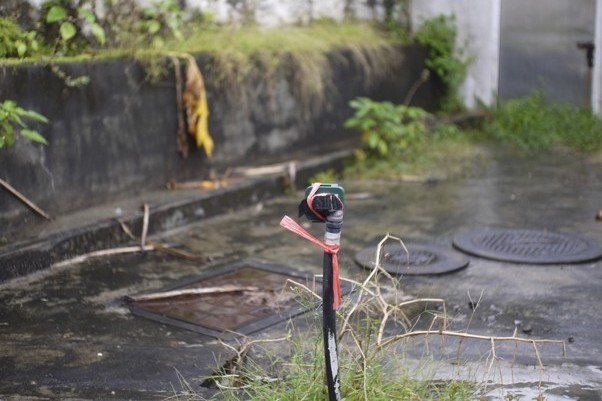
An AudioMoth recorder deployed at the residential study site in Kuching, where recordings captured a high volume of bird calls dominated by a small number of common urban species.
The forest site recorded fewer total calls but significantly greater species diversity, capturing native species such as the Oriental Magpie-Robin, Yellow-bellied Prinia, and Indian Cuckoo, alongside other wildlife sounds including insects and bats.
To identify species and analyse the recordings, the students used Adobe Audition to extract and visualise sound waveforms, while the Merlin Bird ID app identified the sounds and images of the bird species.
The waveform analysis revealed significantly greater acoustic magnitude at the forested site compared to the residential area.
“Urban areas mainly support a few adaptable species, while forests provide the resources needed for a wider range of native birds. This shows that urban development reduces biodiversity, and green spaces are essential for keeping ecosystems healthy,” Abigail added.
Setbacks in the Field: A Lesson in Research Resilience
The fieldwork was not without setbacks. The students’ first AudioMoth device was stolen during their initial data collection attempt, resulting in the loss of all recordings from that session.
“Losing all the recordings was a big setback, but it taught us an important lesson – always be cautious about where devices are placed, and make sure to keep backups of collected data,” said Xiang Keat.
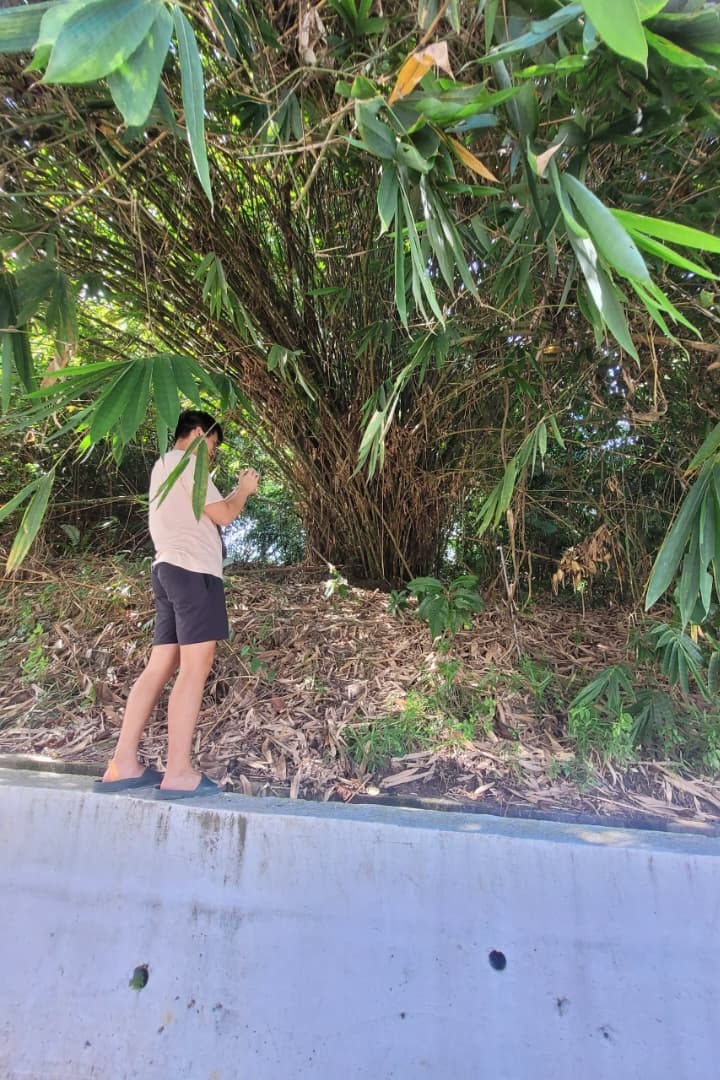
Fieldwork taught the students to back up recordings early and choose secure placement for monitoring devices.
Despite the setback, the experience reshaped the students’ understanding of environmental monitoring and the role technology can play in conservation work.
“With just a pocket-sized device, we were able to gather valuable information about biodiversity right in our backyard. It made us realise that technology can truly open doors for more inclusive and effective environmental monitoring,” Xiang Keat added.
What Bioacoustics Reveals About Ecosystem Health
Prof Moritz Mueller, who lectures the Introduction to Tropical Ecology unit, noted that soundscapes are increasingly treated as indicators of ecosystem health.
Acoustic indices summarise the richness and structure of a habitat’s sound, he explained, while the balance between natural sound and human-made noise signals the level of disturbance.
In a course like this, learning to record and interpret sound becomes a direct, hands-on way to measure biodiversity and environmental change.
The Role of AI in Acoustic Monitoring
Meanwhile, Artificial Intelligence (AI) is rapidly expanding what researchers can do with these recordings. Tools like Merlin Sound ID identify species from their calls, and machine-learning classifiers can scan thousands of hours of audio to flag the few minutes that matter.
“What used to be weeks of manual listening can now be achieved in an afternoon,” Mueller said.
“For students, that means more time for the interesting part: interpreting patterns and asking ecological questions. It also lowers the barrier to entry, letting non-specialists contribute meaningful biodiversity data.”
What This Means for Future Environmental Science Students
The project formed part of the Introduction to Tropical Ecology unit within Swinburne Sarawak’s Bachelor of Science (Environmental Science) programme. The course emphasises practical, data-driven approaches to understanding and protecting ecosystems alongside core scientific training in environmental biology, water science, and research methodology.
For students considering environmental science, fieldwork like this is what a Swinburne degree looks like in practice – real questions, real data, and real lessons from the field.
For more information on Swinburne Sarawak, visit its website, Facebook page (@swinburnesarawak), Instagram page (@swinburnesarawak), LinkedIn page (Swinburne University of Technology Sarawak Campus), X page (@Swinburne_Swk), TikTok page (@swinburnesarawak), YouTube channel (Swinburne Sarawak), or Xiaohongshu page (@SwinburneSwk).