

From sensor networks and AI-driven analytics to connectivity and workforce challenges, this article examines how IoT is reshaping smart farming across Malaysia’s agricultural sector.
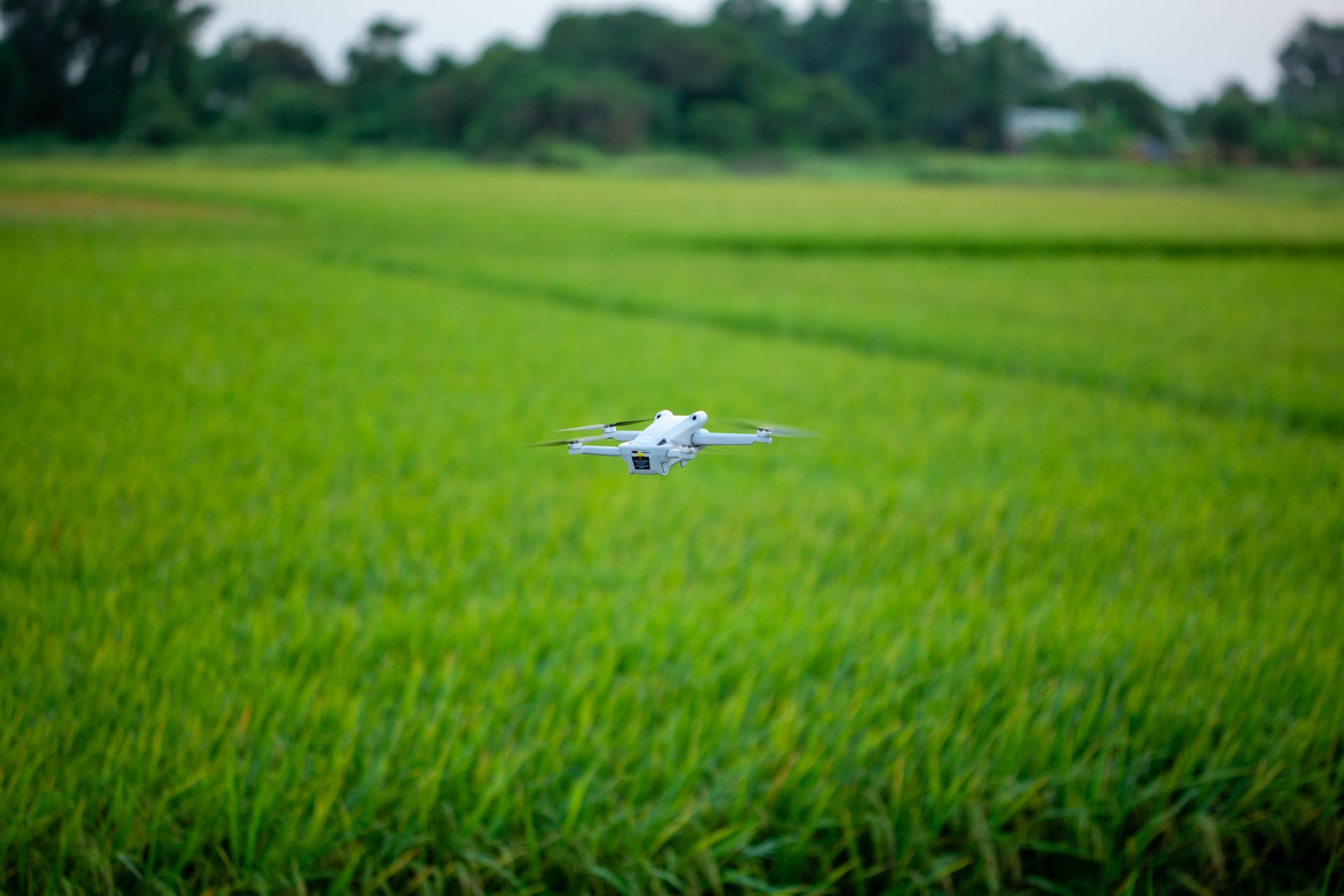
Imagine a farm where crops and livestock are seamlessly monitored through sensor networks, with actuators dynamically controlling irrigation, feeding, and growth environments.
Farmers no longer rely only on walking the fields. Instead, they receive real‑time updates on a mobile app.
This is not science fiction, but the future of agriculture, where Artificial Intelligence (AI) and the Internet of Things (IoT) converge to build a smart farming ecosystem.
IoT in agriculture is already reshaping how Malaysia grows, manages, and secures its food supply.
Malaysia’s Agricultural Landscape and Food Security
The agricultural landscape in Malaysia is incredibly diverse, defined by regional specialities that feed our local tables and drive the national economy. This vibrant ecosystem spans the entire country, encompassing paddy fields, pineapple, pepper, oil palm plantations, livestock farming, aquaculture, forestry and more.
Modernising the agrhiculture sector and strengthening food security has been elevated to a core strategic priority under the Thirteenth Malaysia Plan (RMK-13), as outlined by the federal government.
However, as these operations scale up, a critical bottleneck is the heavy reliance on manual labour.
The Labour Sortfall
This vulnerability was painfully exposed during the COVID-19 pandemic, when sudden movement restrictions were announced, cutting off the workforce and leaving massive amounts of crops to rot in the fields.
IoT Solutions in Agriculture
An emerging solution to address labour shortages in agriculture is to deploy IoT‑based systems that integrate edge devices with AI‑driven analytics.
It transforms labour-intensive traditional practices by utilising connected edge devices for real-time monitoring and control of farming environments, followed by AI-based predictive analytics to optimise crop and livestock management and reduce resource waste.
Monitoring the Farm: Sensors and Smart Tags
Sensory modules are deployed across fields or attached to livestock to act as the “eyes and ears” of the farm, continuously capturing environmental and growth data.
These include soil and crop sensors that monitor soil moisture, temperature, pH, and essential macronutrients such as Nitrogen, Phosphorus, and Potassium to precisely guide fertilisation.
Complementing these are weather stations that track rainfall, wind speed, humidity, and solar radiation, enabling predictive adjustments based on localised climate conditions. On the livestock side, smart tags are deployed to track animal locations, health metrics, and daily activity levels.
The data collected by sensory modules drives the automation of core processes, such as activating water valves for precision irrigation, adjusting vents, shading, and heating systems in the greenhouse, and deploying drones for targeted spraying of pesticides or fertilisers.
Network Connectivity: LPWAN and Zigbee
Network connectivity serves as the vital backbone connecting edge devices across the farm.
Low-Power Wide Area Network (LPWAN), a wireless technology designed for long-range, low-power device communication, is typically adopted for applications involving wide geographical coverage, as documented in recent research.
Conversely, Zigbee, a short-range wireless communication protocol, is often used for localised device communication in contained farming environments, as demonstrated in recent studies on smart greenhouse systems.
Cloud Analytics and AI-Driven Decision Support
While edge devices efficiently handle day-to-day operations, the cloud functions as the macro-level brain. Here, advanced AI models run computationally intensive predictions using multi-source datasets.
These cloud analytics generate high-level insights, including crop yield forecasting, disease and pest outbreak modelling, climate change adaptation, and long-term trend analysis.
Ultimately, all monitoring logs, control records, and predictive insights are delivered to farmers through intuitive user interfaces, such as mobile and desktop apps, to support decision-making in supply chain management and strengthen overall food security.
Challenges to IoT Adoption in Malaysian Agriculture
Despite its promises, several hurdles must be addressed to support Malaysia’s move toward widespread adoption of IoT solutions in the agriculture sector.
Connectivity in Rural Regions
Connectivity remains the foremost challenge. Reliable network infrastructure is the backbone of any smart farming solution, a point consistently raised in research on IoT adoption in agriculture, ensuring seamless communication among devices and enabling real‑time data uploads to the cloud.
Connectivity remains a serious issue across the rural regions in Malaysia, where major farms are located. Hence, the deployment of LPWAN nodes must be strategically planned to optimise the distance between nodes and minimise interference from physical obstacles.
Power Supply for Remote Farms
Power supply is another critical concern. Securing a stable power supply for remote farms and rural estates is both difficult and costly. Solar panels are the primary choice for powering IoT systems, but they remain vulnerable to weather disruptions.
To guarantee uninterrupted operations, a cost-effective backup power plan is essential. This ensures that even during prolonged periods of low sunlight or power failures, critical sensors and actuators remain fully functional.
Building Digital Competencies Among Farmers
Beyond the technical barriers, human talent development is also vital. Farmers must be equipped with the practical knowledge to operate these new systems.
Currently, a large portion of Malaysia’s food production relies on smallholders, as widely documented by industry observers, many of whom are older farmers accustomed to traditional practices.
Hence, developing farmers’ digital competencies is critical for effective adoption of smart farming solutions, allowing them to navigate through mobile apps and troubleshoot basic technical issues.
Without continuous hands-on training, these solutions may end up gathering dust rather than strengthening long-term food security.
Dr Albe Chai is a lecturer with the Faculty of Engineering, Computing and Science. His research interests include IoT, Artificial Intelligence and smart systems. Albe can be contacted at [email protected]