

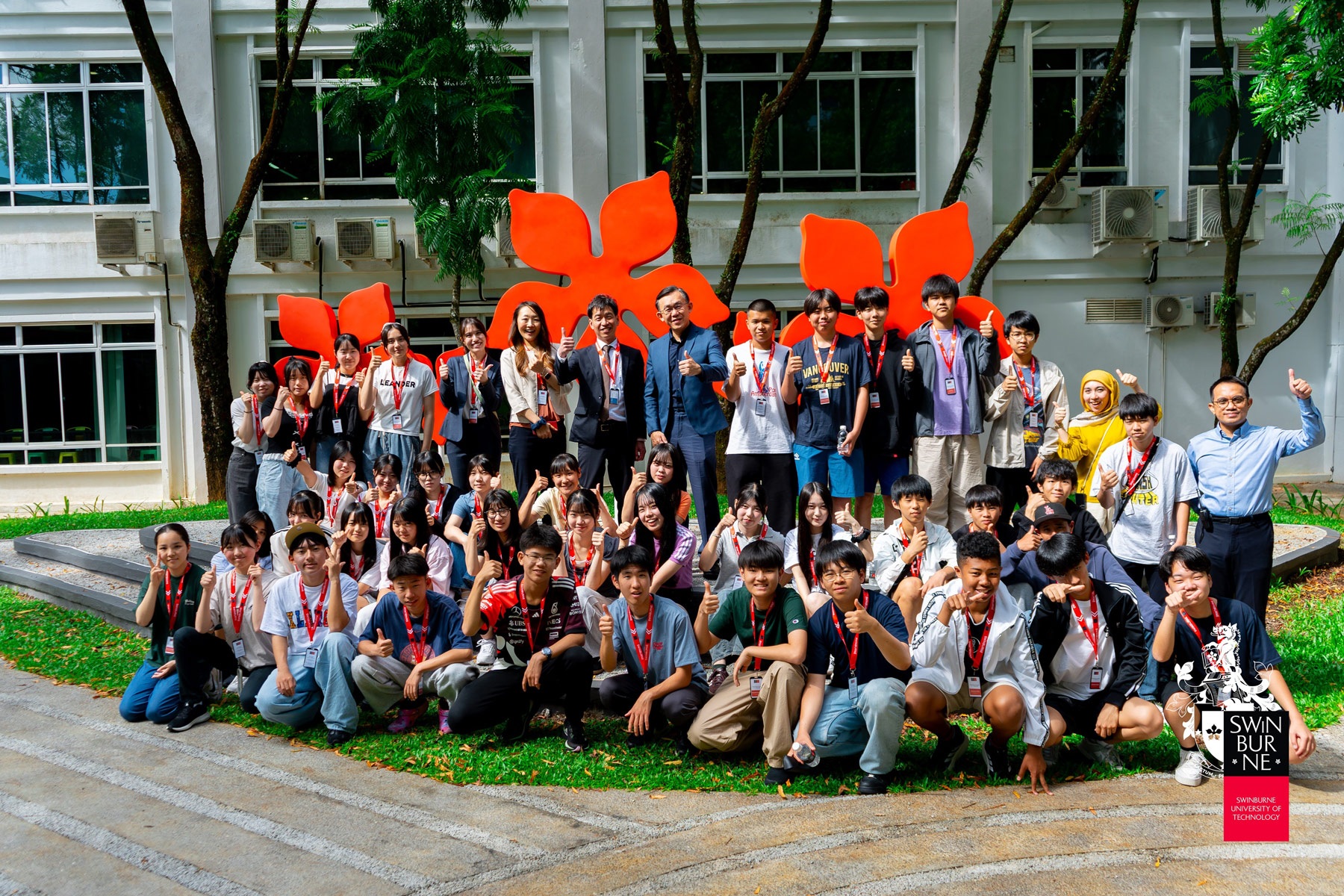
KUCHING – Swinburne University of Technology Sarawak Campus’ Global Discovery Week (GDW) program continues to provide international students with immersive learning experiences that broaden perspectives, cultivate global citizenship, and foster cultural exchange.
Two recent editions of the program welcomed students from Kindai University Junior and Senior High School and Kanda University of International Studies in Japan, with both groups participating in a curated range of academic, cultural, and experiential activities.
A key pillar of Swinburne Sarawak’s internationalisation strategy, the GDW program creates structured opportunities for international students to engage meaningfully with Sarawakian culture, biodiversity, and future-focused learning, while developing communication and teamwork skills and building lasting friendships.
The program supports the university’s broader vision of nurturing globally connected graduates – equipping youths with the intercultural competencies, confidence, and global outlook that today’s world demands. It also reinforces the university’s role as a regional hub for international academic collaboration.
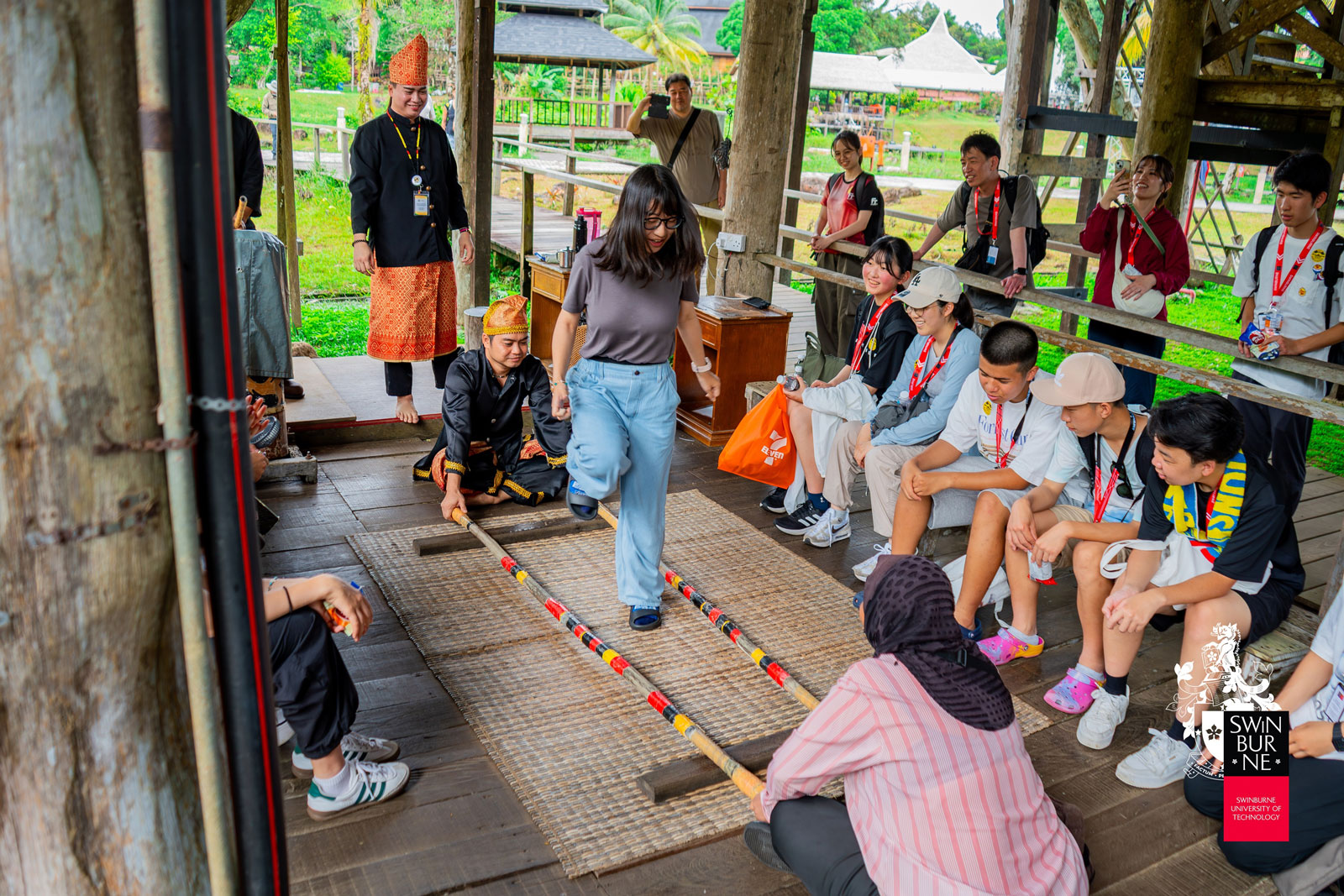
A student tries out a traditional dance at the Sarawak Cultural Village.
From 11 to 19 May, Swinburne Sarawak welcomed 40 students from Kindai University Junior and Senior High School in Osaka, Japan, for GDW. Throughout the program, the students participated in classroom sessions on topics ranging from Sarawak’s culture and heritage to design thinking for sustainability and the future of work in the age of artificial intelligence (AI), complemented by excursions that showcased Sarawak’s unique cultural and environmental landscape.
Among the group’s most memorable moments was a visit to the Sarawak Cultural Village, where the students tried their hand at the traditional Orang Ulu bamboo blowpipe and the Melanau dance Alu-Alu as well as savoured local delicacies such as Ayam Pansuh.
An excursion to the Semenggoh Wildlife Centre offered students a first-hand look at orangutan conservation and environmental stewardship, while a visit to the Sarawak Biodiversity Centre deepened their understanding of sustainability and the preservation of indigenous knowledge, including traditional herbal medicine, fragrances, and natural resources derived from Sarawak’s forests.
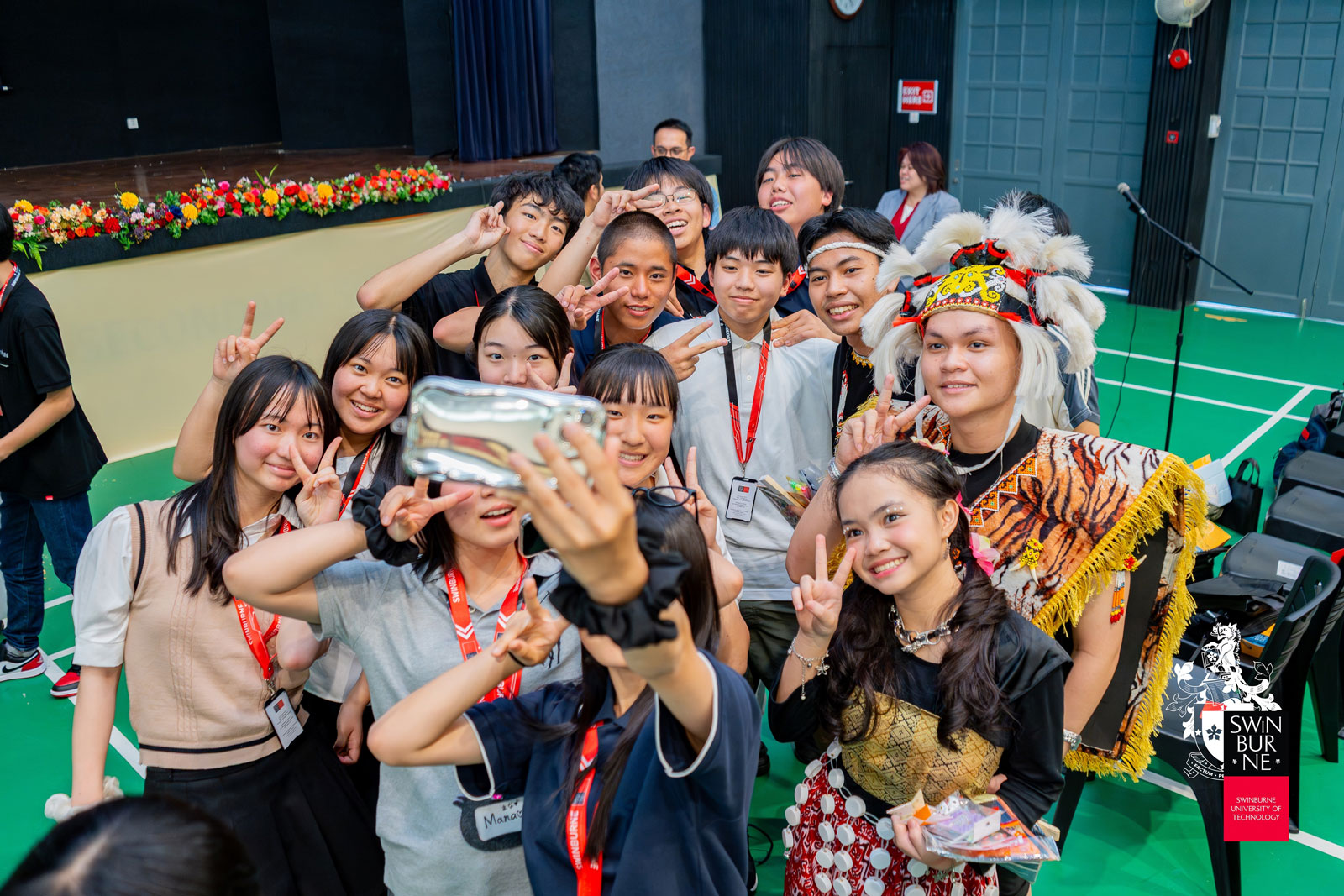
The visiting students from Kindai University Junior and Senior High School take a photo with students from Yayasan Sarawak International Secondary School.
Beyond the classes and expeditions, the GDW program fostered genuine connections between the visiting Japanese students and Swinburne Sarawak’s students, enabling them to build friendships and gain insights into one another’s cultures. The participants’ visit to Yayasan Sarawak International Secondary School Petra Jaya also created another meaningful opportunity for mutual learning and a deeper appreciation for Sarawak’s multicultural community.
Despite the program’s short duration, the students demonstrated notable growth in confidence, particularly in their ability and willingness to communicate and deliver presentations in English. This was evident during the final presentation session, where they shared personal reflections on their learning journey through stories, photos, and videos captured throughout the week.
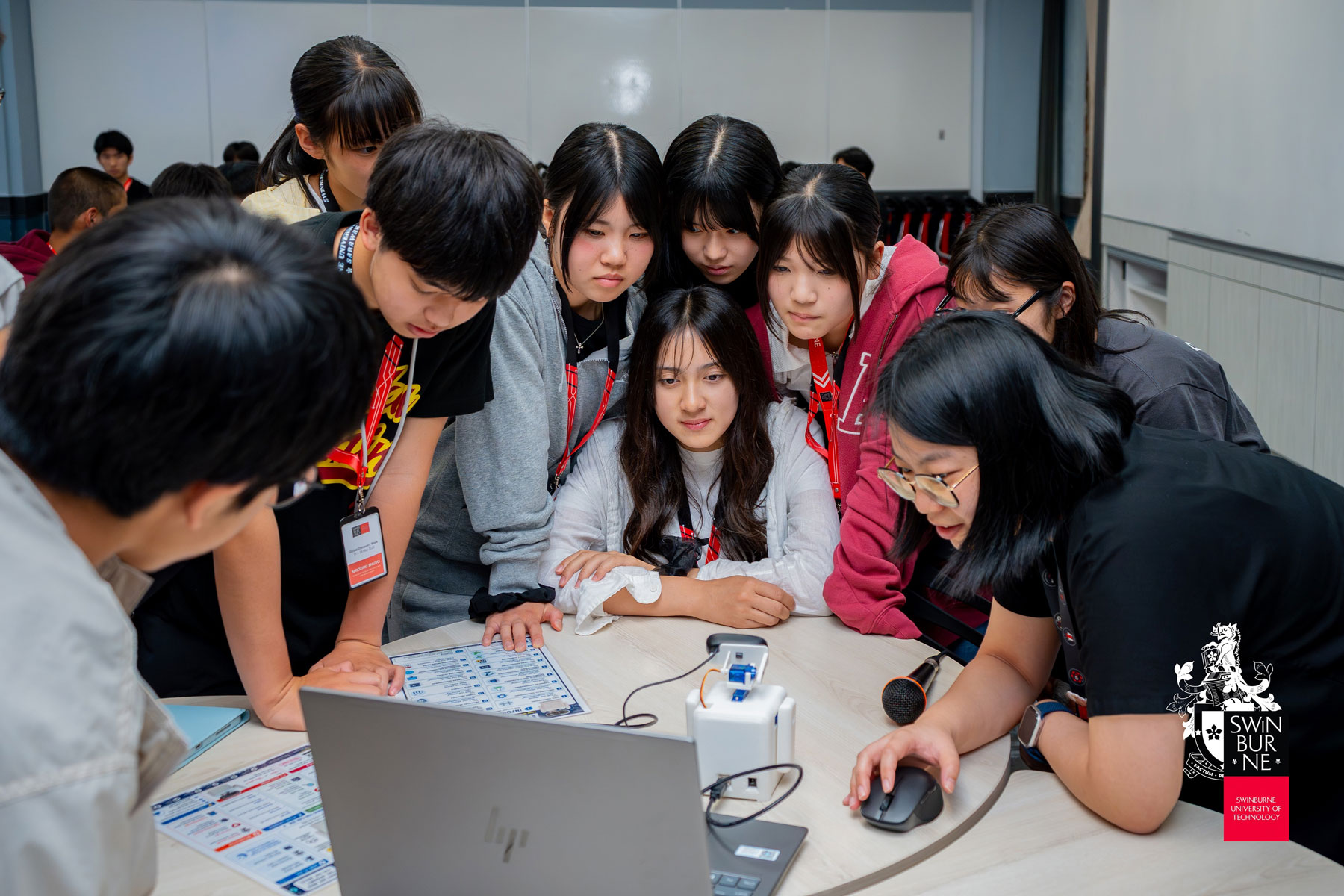
A lecturer guides the students through a hands-on learning session.
Hideaki Furukawa, Director of the Office of Global Education at Kindai University High School, believed that the students’ experience abroad would inspire them to broaden their perspectives and embrace new opportunities.
“This program definitely enhanced our students’ confidence and communication skills. During the daily reflection sessions, I could see every student gradually and steadily develop as individuals,” he said.
Yuko Aoyama, English and Homeroom Teacher at Kindai University High School, pointed out that going abroad, seeing the world, and immersing themselves in a multicultural environment was an eye-opening experience for the Japanese high schoolers.
“When they first came to Kuching, they were not very confident and thought that their English was not good enough. However, they gradually started to feel the joy of communicating with others in English and they also learned that communication is not just about words but also expressions and gestures. They started having fun, and that helped them gain confidence,” she said.
The visiting students also shared positive feedback on the program, with Kosei Fujihara noting that it allowed him to learn new things and gain new experiences.
Another student, Mana Mizuta, said, “This trip allowed me to experience the joy of travelling abroad. My favourite activity was visiting Yayasan Sarawak International Secondary School because I enjoy talking to people my age.”
Building on this, Swinburne Sarawak also welcomed 18 undergraduate students from Kanda University of International Studies, Japan, for a two-week interdisciplinary program held in Kuching from 23 to 30 June, before continuing in Kuala Lumpur from 1 to 3 July.
Through hands-on experiential learning, participants explored the intersections of the United Nations Sustainable Development Goals, cultural heritage, biodiversity, AI, and business and entrepreneurship, while developing their communication, teamwork, and leadership skills.
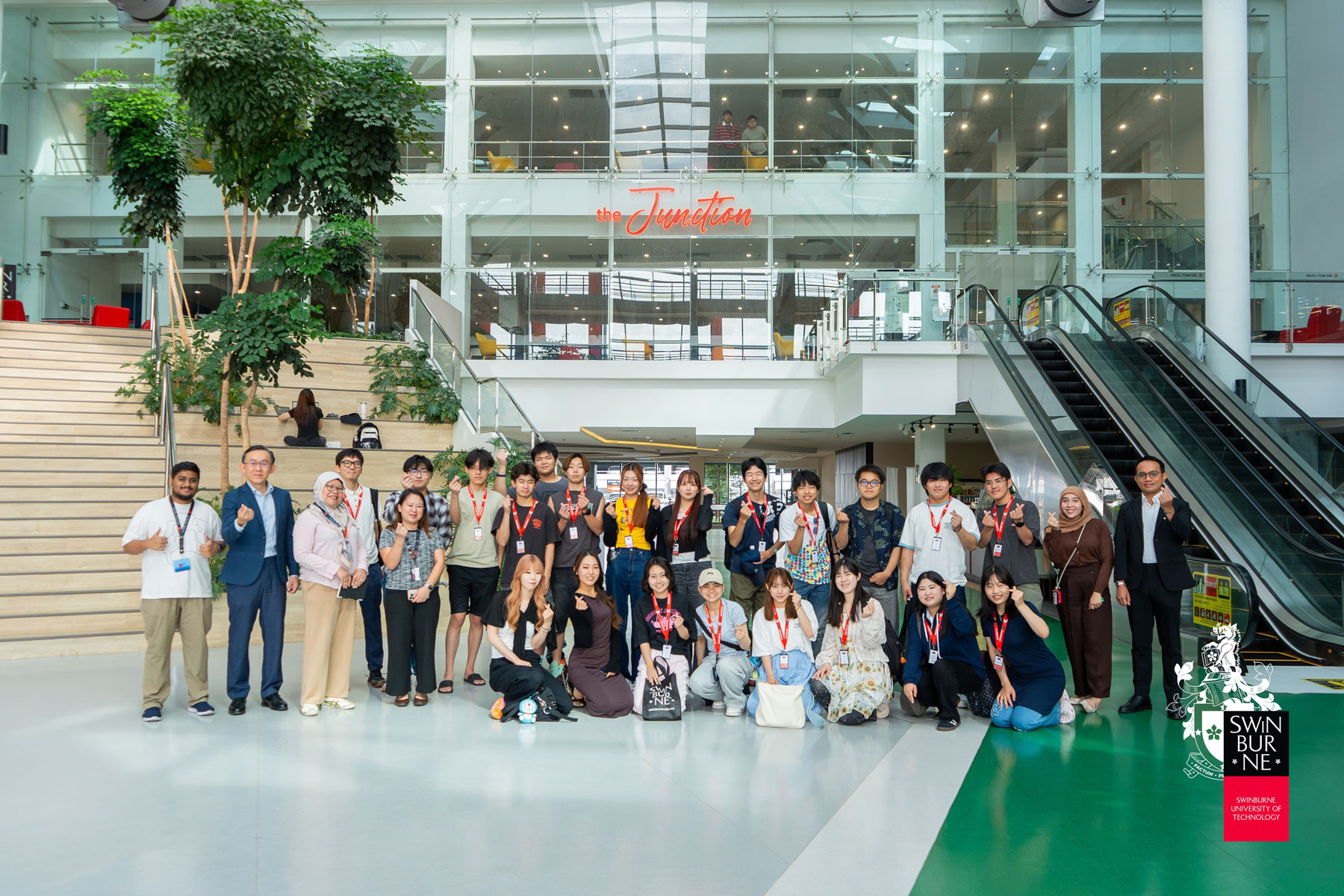
A group photo of the visiting students from Kanda University of International Studies.
By the end of the program, the students had gained a deeper understanding of global challenges and the value of cross-cultural collaboration, equipping them with the mindset, knowledge, and skills to become responsible global citizens.
As Swinburne Sarawak continues to expand its international partnerships, the GDW program reflects the university’s commitment to creating impactful global learning opportunities that connect young learners across cultures and prepare them to thrive in an increasingly interconnected world.
For more information on Swinburne Sarawak, visit its website, Facebook page (@swinburnesarawak), Instagram page (@swinburnesarawak), LinkedIn page (Swinburne University of Technology Sarawak Campus), X page (@Swinburne_Swk), TikTok page (@swinburnesarawak), YouTube channel (Swinburne Sarawak), or Xiaohongshu page (@SwinburneSwk).