

Swinburne Sarawak students, staff, and environmental partners cleared 104 kilograms of litter from Pasir Panjang beach during the university’s SDG Carnival, and the debriefing raised questions about plastic waste and what comes next.
A Clean-up After the Haze
It was the second clear day after weeks of high levels of particulate matter in the air, or haze, so we resurrected the Beach Clean-up for Swinburne Sarawak’s SDG Carnival.
The SDG Carnival is our annual celebration of the work we have done and are continuing to do to support the United Nations’ Sustainable Development Goals (UNSDG) through our students and their friends and family, staff, and partnerships with government agencies and non-profit environmental organisations.
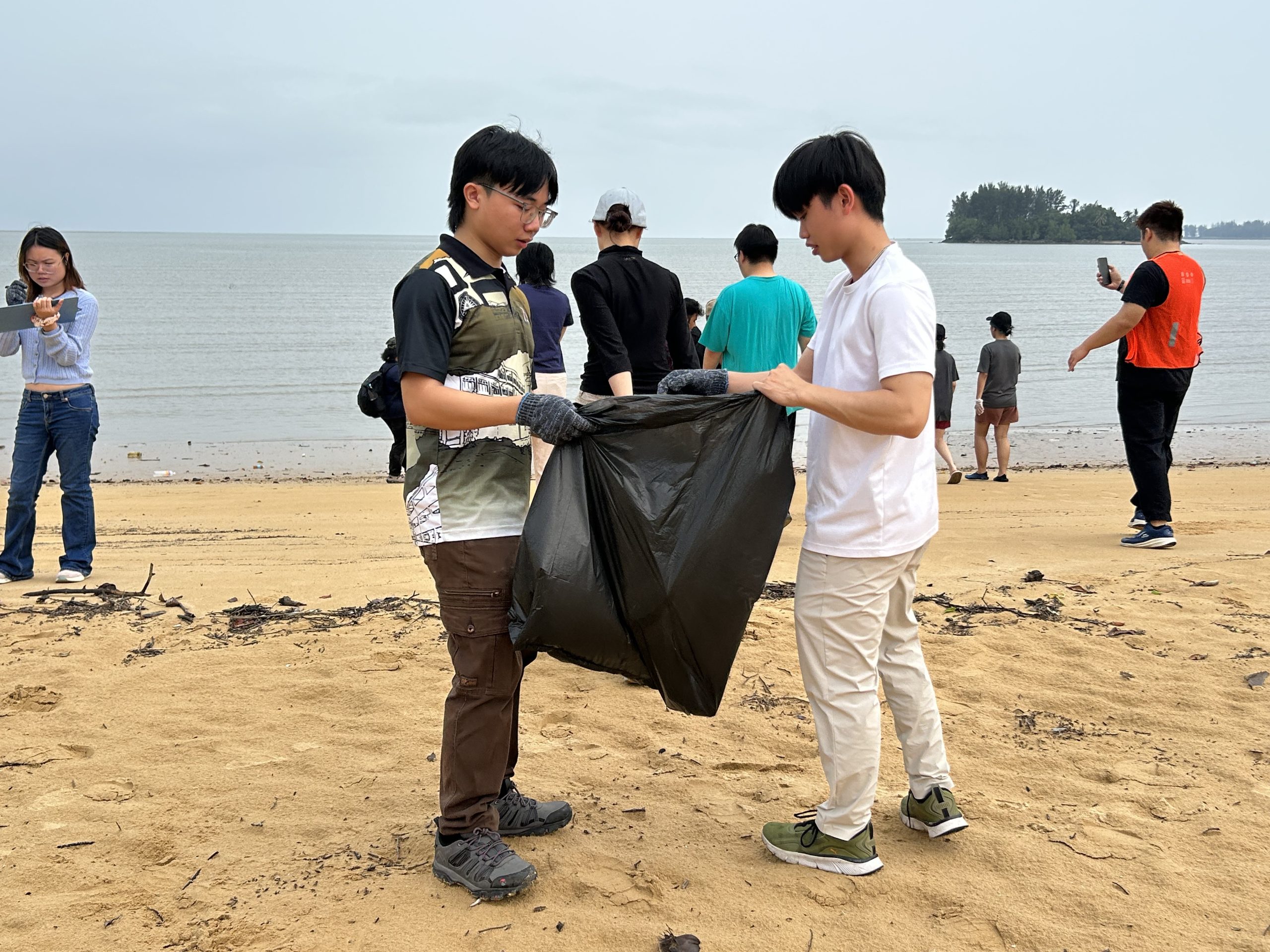
On this day, when we could see the blue skies, two busloads of students from the Swinburne Sarawak Green Club, their friends, and members of the environmental organisation Sarawak Eco Warriors gathered at Pasir Panjang. We met an eager team from one of our sponsors, Sarawak Metro. After the briefing, we soon got to work.
We worked in groups of four or five, each group with a clipboard and a data collection sheet.
We noted every item we picked up from the beach, the shallow waters, and the grassy banks further up the shore.
Some students spent a good hour trying to dig up an engine left on the beach, so deeply entrenched in the sand over time that it was impossible to dig it out. How long had the engine been lying there? Why did no one remove it? How did it get there in the first place?
We don’t know, but we do know that the beach and its waters and grassy banks were littered with the detritus of human life.
What the Volunteers Found
These are some of the things we found:
- Used diapers, plastic containers, a syringe
- An engine, guni sacks, fishing lines, poles, rope
- Plastics: straws, cups, covers, bags, picnic sheets, takeaway food containers and cutlery
- Styrofoam packs, cigarette butts, broken glass jars.
One hundred and four kilograms in all.
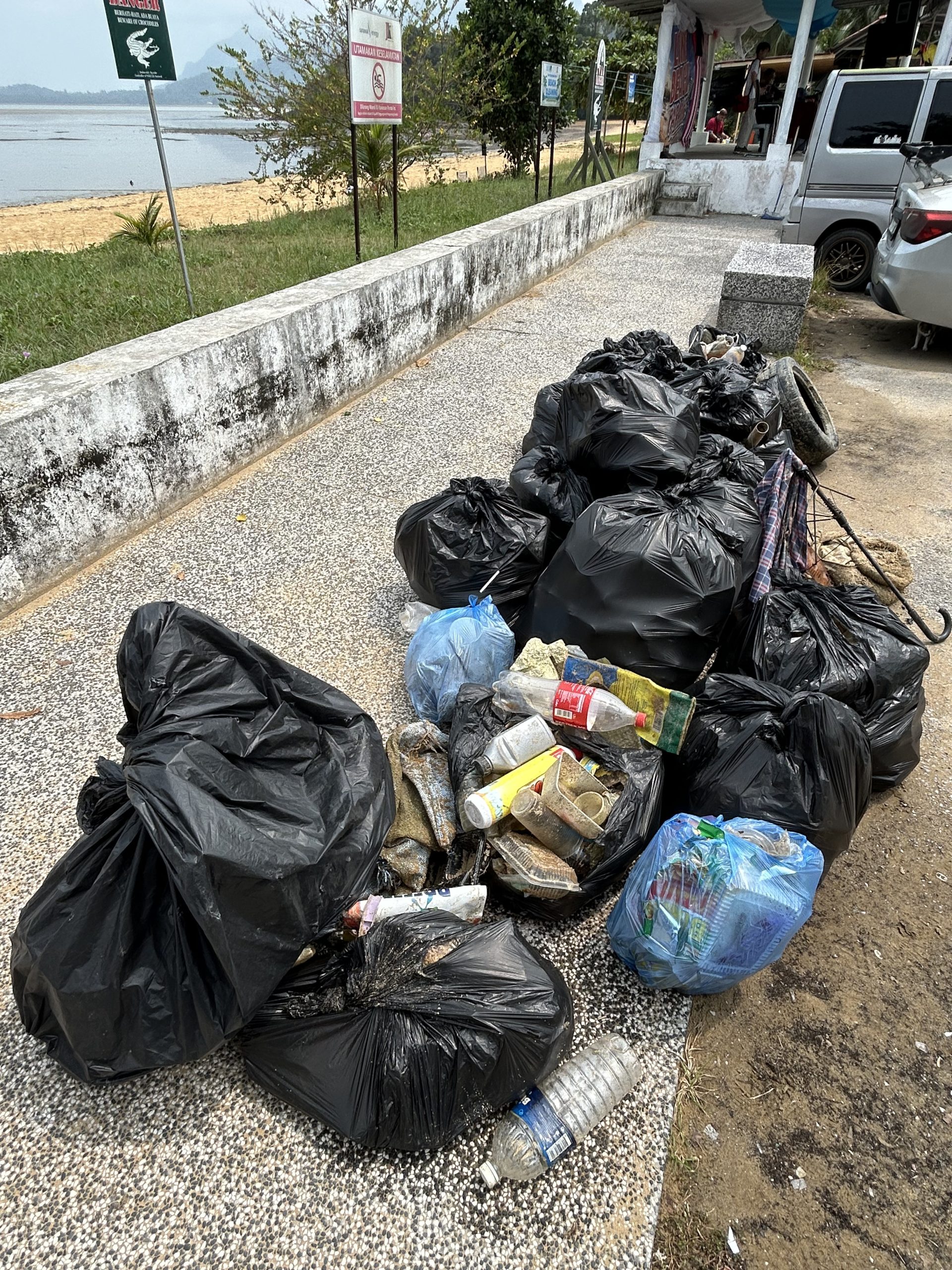
These were the fruits of our labour at the beach clean-up, on a beach not 40 minutes from the city. It should have been a happy day on the beach, with students enjoying a swim or a paddle, and maybe a picnic with friends or family. Instead, with all the litter, this was no place to be enjoying any recreation at all.
The Plastic Problem
Nearby, there is a local eatery with snacks and meals, and yes, more plastics to contain the refreshing drinks that quench our thirst. In the morning, before the clean-up, we had supplied our volunteers with sandwiches, freshly made but housed in triangular plastic containers to keep the bread soft and tasty.
We humans have so much ingenuity, but we cannot invent biodegradable plastics to replace the ubiquitous plastics we use in our daily lives. Why is it so hard?
Meanwhile, we invent, manufacture, and stockpile plastics that will survive many human lifetimes. We consume them daily without knowing it, in the fish and meat we eat and in the vegetables we plant and fertilise with chemicals and particles from the haze permeating our lives.
What the Debriefing Revealed
At the debriefing at the end of the beach clean-up, we were given some sobering information. The trash we had collected might wind up in waterways again. Landfills and dumps might not be as secure as we had thought.
Sadly, the litter would also return next week, marring the beach, spoiling the waters, and destroying what could have been a beautiful picnic area. We humans consume and produce waste at a frightening rate.
Reasons for Hope
Are there positives from this experience? Our volunteers were mostly youngsters, university students from the Swinburne Sarawak Green Club who have great energy and great hope. They gave up a lazy Sunday morning to pick up trash on a beach. Staff from Sarawak Metro, one of the sponsors of the SDG Carnival, joined them, along with the Natural Resources and Environment Board (NREB), which specifically sponsored the beach clean-up.
Non-profit organisations such as the Sarawak Eco Warriors also contribute, a team of hopeful people who believe humans can change and make change to help our environment and nature.
Still, we know that more companies and students are ready to take part in beach clean-ups. Even so, we need more than volunteers with clipboards. We have faith that the way takeaway containers are produced will change, that biodegradable equivalents of plastic will emerge, and that we humans will use our creativity and ingenuity to enjoy nature and its beauty without destructive behaviour.
For future generations, we hope to keep the beach fresh and beautiful, so that our poems may describe a beach’s beauty and our enjoyment of it, rather than despair at how it has been spoiled.
Dr Christina Yin is Head of the Media and Communication Department at Swinburne University of Technology Sarawak Campus and an advisor to the Swinburne Sarawak Green Club. She can be contacted at [email protected].