

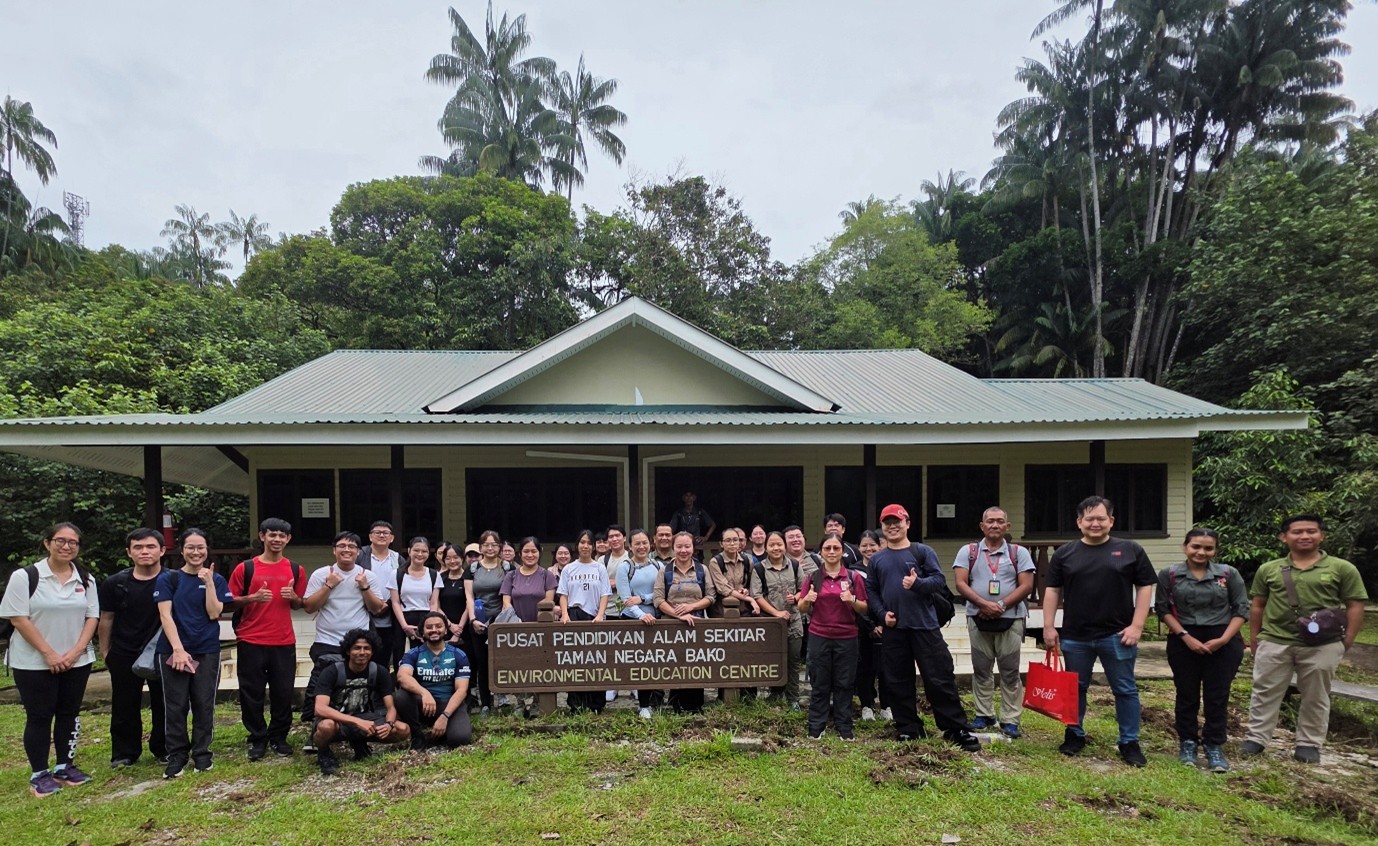
The field experience was conducted in collaboration with Sarawak Forestry Corporation and funded under the Perantis 2025 Grant.
The program aimed to provide participants with first-hand exposure to Sarawak’s rich ecosystems while fostering greater awareness of plant biodiversity conservation and emerging technological solutions that can support environmental monitoring and education.
A total of 34 participants from diverse backgrounds, including representatives from universities, industry partners, and government agencies, participated in the immersive learning program.
During the program, participants joined guided field sessions led by park conservationists from Sarawak Forestry Corporation. These sessions included nature exploration along designated trails, where participants learned about the park’s unique plant biodiversity, ecological habitats, and conservation practices. Importantly, the guided sessions also incorporated Indigenous ecological knowledge shared by park guides.
Participants were introduced to traditional understanding of forest plants, their cultural significance, and their uses within local communities, including medicinal and practical applications. This knowledge provided valuable insight into how Indigenous and local communities have long contributed to understanding and stewarding forest ecosystems.
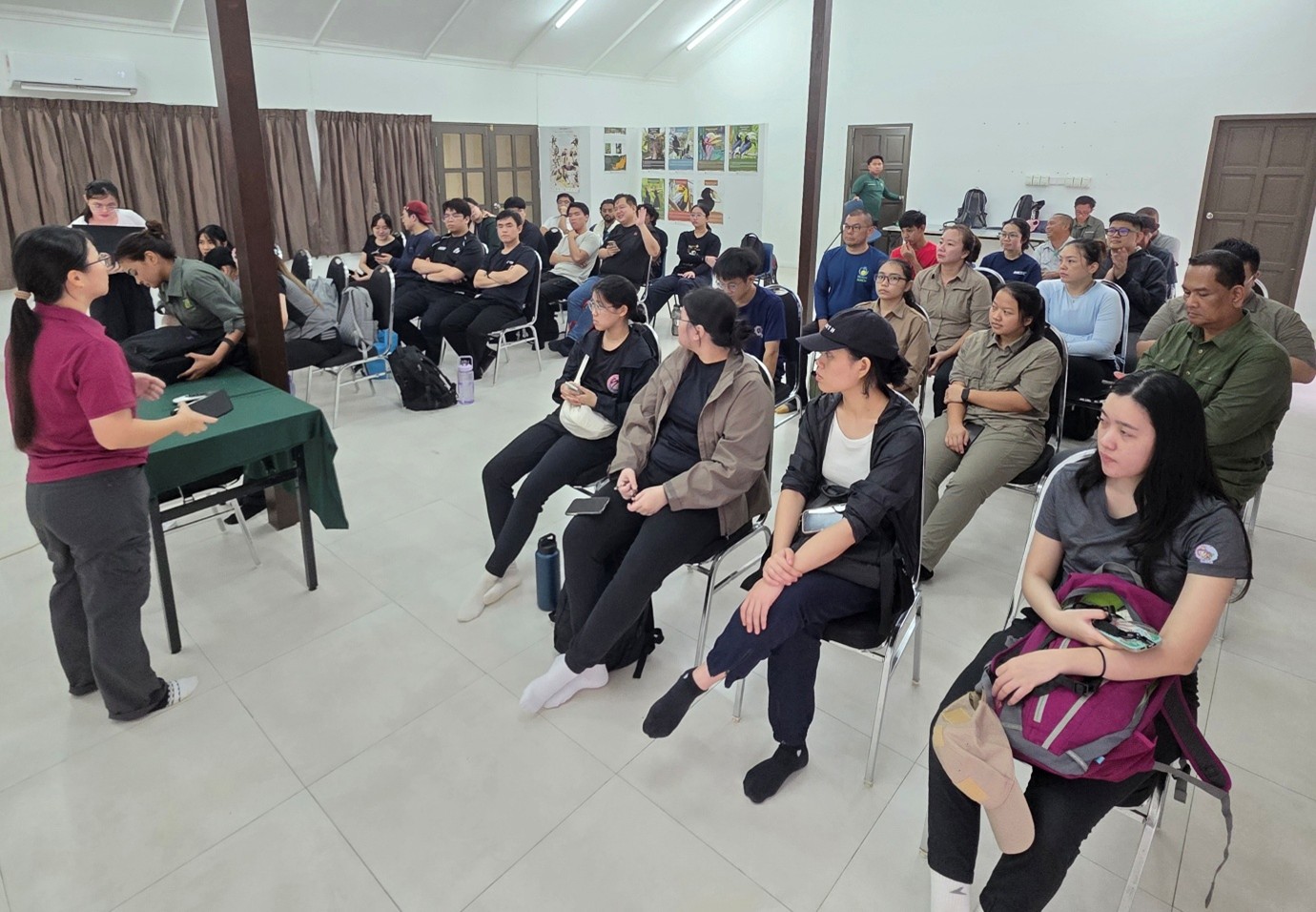
Madam Joyce Ting, SFC Project Lead, briefs participants on the significance of the Park Guiding Program, sharing insights into its role in biodiversity conservation and outlining the way forward for enhancing guided experiences.
Beyond field observation, the program also highlighted how emerging digital technologies can complement both scientific research and traditional ecological knowledge. Researchers and students from Swinburne Sarawak shared their ongoing research and development initiatives involving Artificial Intelligence (AI) and Augmented Reality (AR) technologies that could potentially enhance biodiversity education and park interpretation programs.
These technologies aim to support park guides and visitors by enabling interactive learning experiences, assisting with plant species identification, and improving biodiversity documentation. Integrating digital innovation with local ecological knowledge can help create more engaging and inclusive approaches to conservation awareness.
According to the program lead, Ts. Dr. Lee Sue Han from Swinburne University of Technology Sarawak Campus, the initiative highlights the importance of combining scientific innovation with traditional ecological knowledge in conservation efforts.
“Biodiversity conservation requires both scientific innovation and the wisdom accumulated by local communities over generations. Through this immersive program, we aim to demonstrate how emerging technologies such as artificial intelligence can complement Indigenous ecological knowledge and field-based expertise to strengthen conservation efforts. By bringing together participants from diverse sectors, we hope to inspire new collaborations that support sustainable biodiversity protection,” she said.
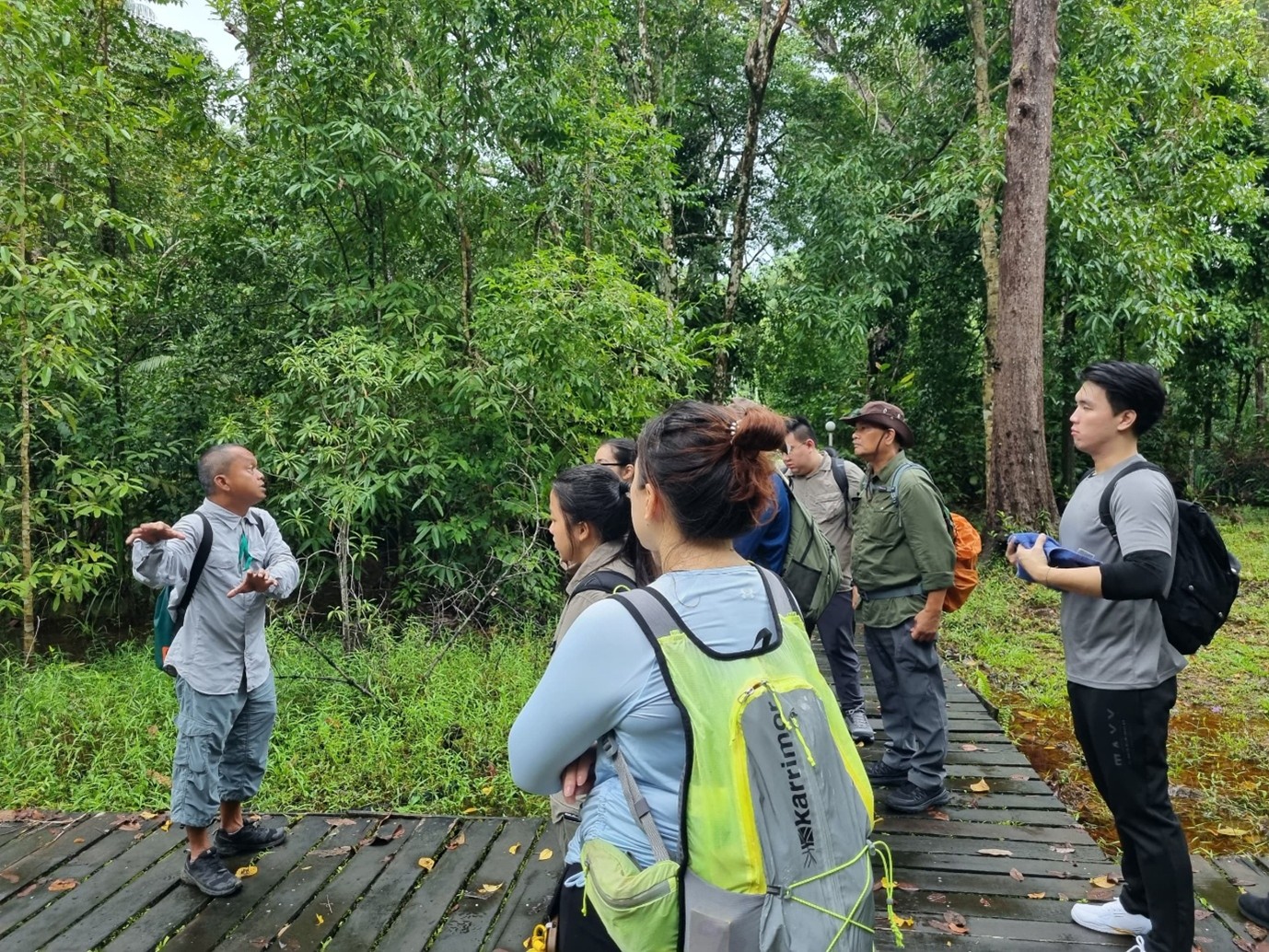
Participants are guided by a Bako National Park guide along the trails, learning about plant biodiversity, conservation practices, and Indigenous ecological knowledge.
The immersive field experience also served as a platform for knowledge exchange and interdisciplinary collaboration. Participants had the opportunity to discuss conservation challenges, share perspectives from their respective sectors, and explore potential collaborations that bridge technology, research, conservation practice, and community knowledge.
The program concluded successfully with participants expressing strong interest in future initiatives that combine technology, community engagement, and environmental stewardship. The event also fostered new professional networks and strengthened partnerships between academic researchers, conservation agencies, industry stakeholders, and community representatives.
Through initiatives such as this immersive field experience, Swinburne continues to promote technology-driven and community-informed approaches to biodiversity conservation, supporting sustainable environmental management in Sarawak and beyond.
For more information on Swinburne Sarawak, visit its website, Facebook page (@swinburnesarawak), Instagram page (@swinburnesarawak), LinkedIn page (Swinburne University of Technology Sarawak Campus), X page (@Swinburne_Swk), TikTok page (@swinburnesarawak), YouTube channel (Swinburne Sarawak), or Xiaohongshu page (@SwinburneSwk).