

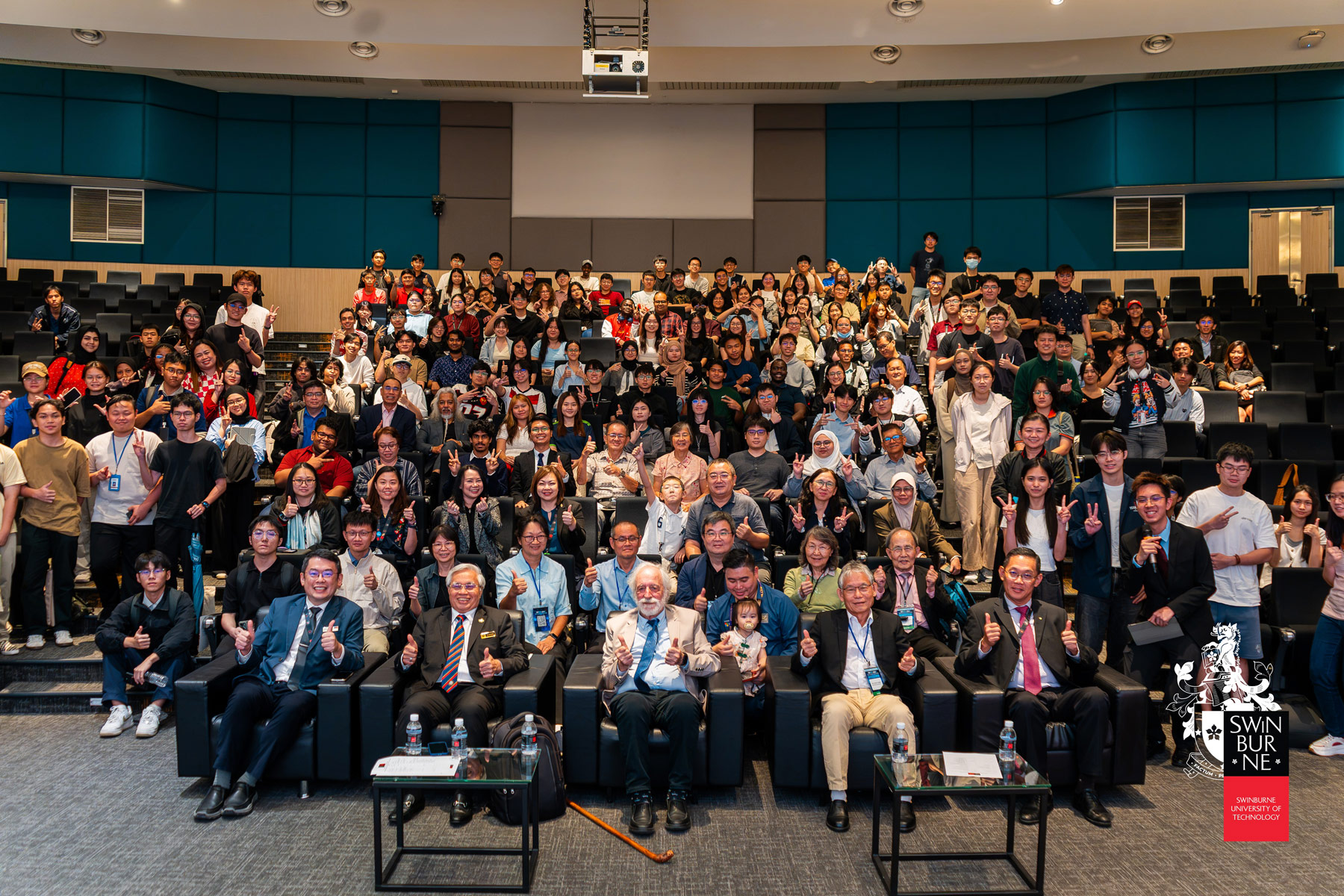
KUCHING – Swinburne University of Technology Sarawak Campus marked a milestone in advancing public engagement with science and high-quality education by hosting a Nobel Laureate Public Lecture featuring Professor Pierre Agostini, co-recipient of the 2023 Nobel Prize in Physics, from The Ohio State University, USA.
Held at Swinburne Sarawak’s campus on 2 November 2026, the event drew approximately 350 attendees, including students, academics, science enthusiasts, and members of the public. It was the first Nobel Laureate Public Lecture co-organised with the Malaysian Institute of Physics, in collaboration with the Ministry of Education, Innovation, and Talent Development Sarawak (MEITD) and Business Events Sarawak.
The public lecture was officiated by Professor Emeritus Datuk Dr Khairuddin bin Abdul Hamid, Advisor for Higher Education, MEITD, who delivered the welcoming remarks. Professor Dr Tou Teck Yong, President of the Malaysian Institute of Physics, then introduced the institute and Professor Agostini to the audience. Their presence underscored the importance of knowledge-sharing opportunities for the people of Sarawak.
“Sarawak recognises the need to emphasise frontier research, and we therefore promote practices related to building academic excellence in universities and research institutes. Strong research aligns closely with MEITD’s aspirations to nurture future talent through research, strengthen STEM education, promote innovation, and cultivate a knowledge-based society,” said Professor Emeritus Datuk Dr Khairuddin.
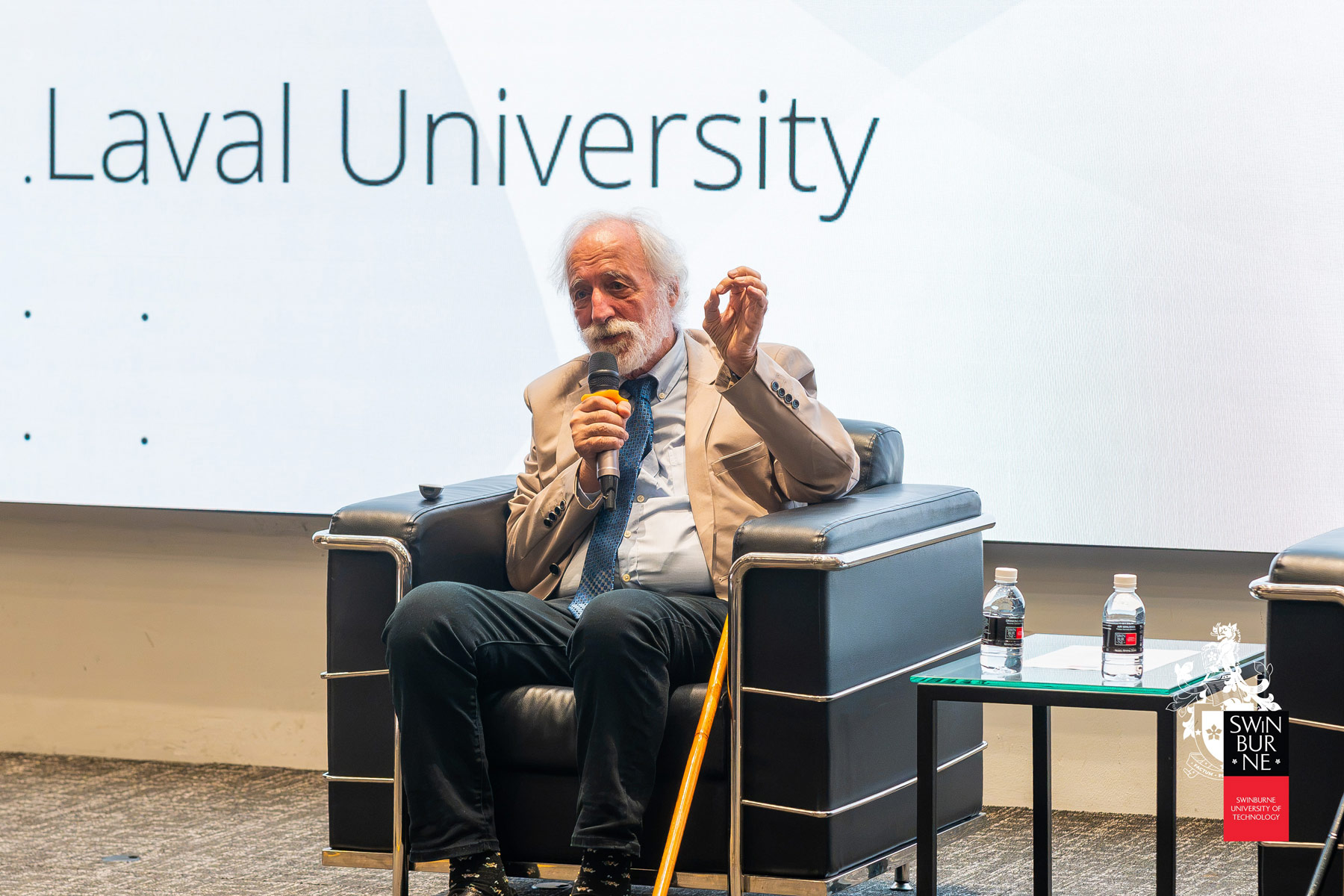
Professor Pierre Agostini speaks at the event.
Professor Agostini, a world-renowned physicist, shared his expertise through a lecture entitled “Strong-Field Photoelectric Effect”. The lecture revisited Einstein’s explanation of the photoelectric effect and explored how the interaction between light and electrons can reveal new phenomena in the presence of extremely strong electric fields generated by ultrashort laser pulses.
The attendees were introduced to fascinating concepts at the frontier of modern physics, including multiphoton ionisation, above-threshold ionisation, and high-harmonic generation. Professor Agostini also explained how attosecond measurements can reveal ultrafast electron dynamics, demonstrating how advances in physics can make previously invisible processes observable.
The lecture was followed by a question-and-answer (Q&A) session moderated by Professor Dr Chin See Leang of Université Laval, Canada. The session proved to be one of the highlights of the afternoon, with members of the public as well as local and international university students raising a wide range of thoughtful and inquisitive questions. The lively exchange provided a rare opportunity for participants to interact directly with a Nobel laureate and another internationally respected physicist, with Professor Agostini and Professor Chin addressing each question insightfully.
The strong turnout and enthusiastic participation reflected the public’s growing interest in science, innovation, and knowledge. Beyond the lecture itself, the event provided a platform for students and the wider community to be inspired by scientific discovery and to appreciate the importance of curiosity and research in addressing future challenges.
The event concluded with an appreciation ceremony attended by representatives from Swinburne Sarawak and partner organisations. The programme featured an appreciation presentation by Professor Ir Sim Kwan Yong, Deputy Pro Vice-Chancellor (Academic) of Swinburne Sarawak, followed by a networking session.
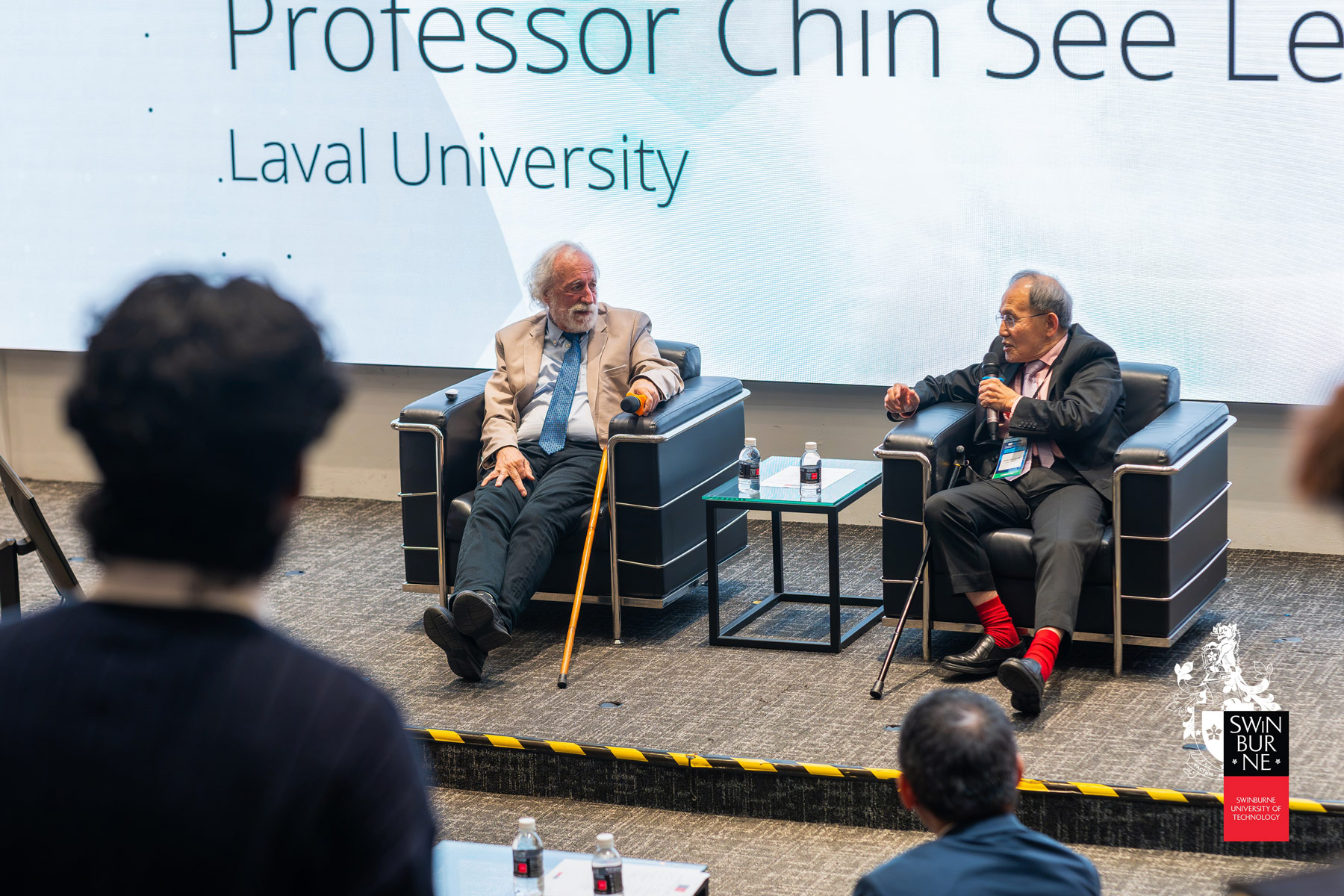
Professor Dr Chin See Leang (right) speaks during the Q&A session. Also seen is Professor Pierre Agostini (left).
By bringing a Nobel laureate of Professor Agostini’s stature to Sarawak, Swinburne Sarawak continues to strengthen its role as a university that connects education, research, and global expertise with the community. The successful public lecture also demonstrated the value of collaboration between universities, government, professional bodies, and industry partners in creating meaningful educational opportunities for the people of Sarawak.
With its continued commitment to excellence in education and research, Swinburne Sarawak remains dedicated to nurturing curiosity, broadening access to world-class knowledge, and preparing future generations to contribute confidently to an increasingly complex and innovation-driven world.
For more information on Swinburne Sarawak, visit its website, Facebook page (@swinburnesarawak), Instagram page (@swinburnesarawak), LinkedIn page (Swinburne University of Technology Sarawak Campus), X page (@Swinburne_Swk), TikTok page (@swinburnesarawak), YouTube channel (Swinburne Sarawak), or Xiaohongshu page (@SwinburneSwk).