
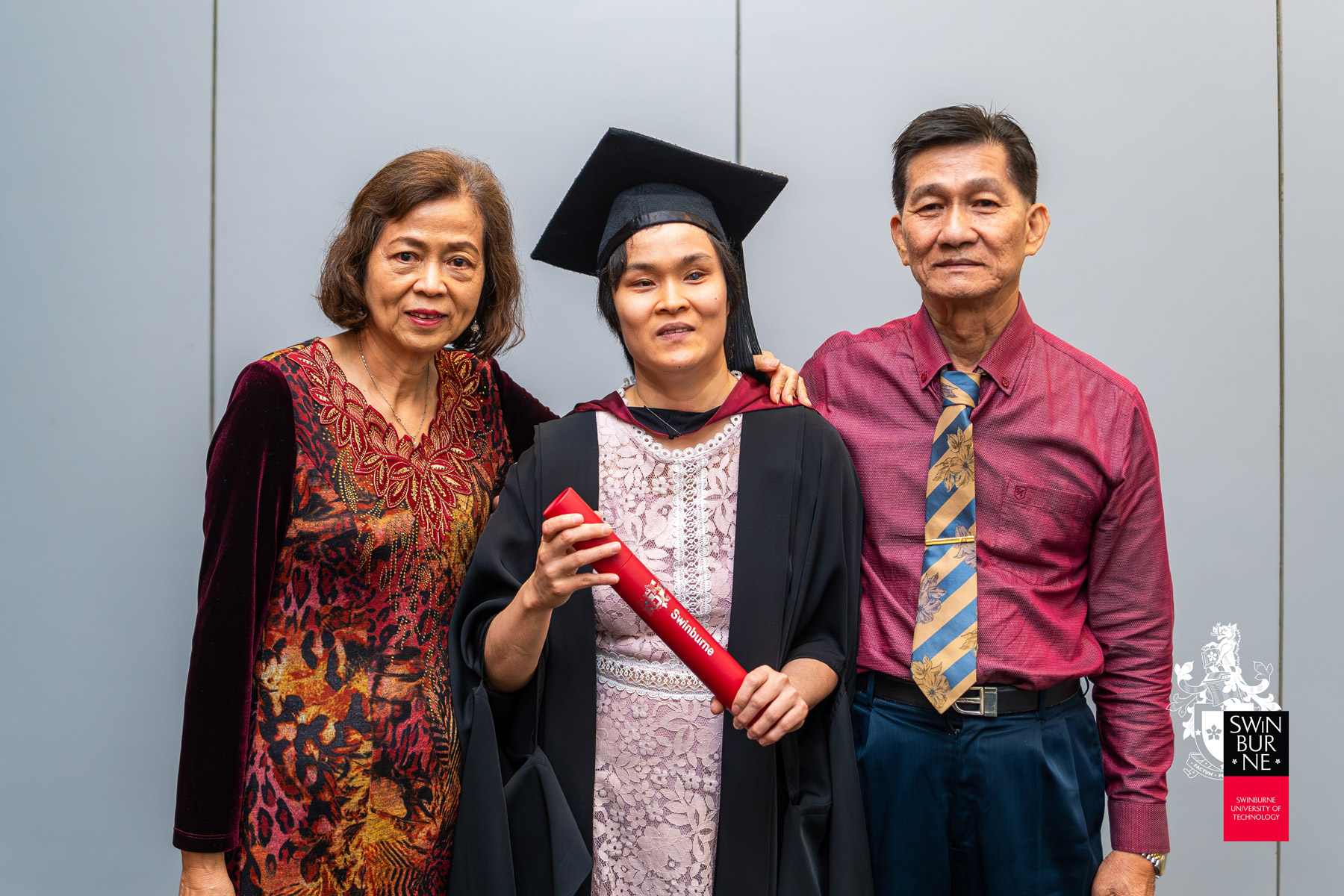
KUCHING – Ruth Yong Wang Theen, who has been fully blind since birth, hopes her achievement in completing a Master of Arts in Teaching English to Speakers of Other Languages (TESOL) at Swinburne University of Technology Sarawak Campus will inspire others to pursue their aspirations with perseverance, regardless of the challenges they face.
“If I, as a fully blind student, can pursue and complete a master’s degree, I hope others will believe that they can overcome their own challenges too. The journey may not always be easy, but difficulties do not necessarily have to prevent us from reaching our goals,” she said.
For Ruth, this achievement is not only an academic milestone but also a personal one – teaching has been a longstanding passion of hers, while English has always been her favourite subject.
Before joining Swinburne Sarawak, she completed a Bachelor of Communication and Psychology at Monash University Malaysia. Her interest in language education then grew through a volunteering opportunity that would shape her future direction.
In 2020, amid the COVID-19 pandemic, she began volunteering to teach English to refugee students. The experience deepened her interest in teaching and language education, eventually leading her to enrol in Swinburne Sarawak’s TESOL programme.
“As someone who is fully blind, pursuing postgraduate studies required me to find ways to navigate materials and learning environments that were not always accessible. Nevertheless, I was determined to complete my degree and make the most of the opportunity,” she remarked.
Ruth described her postgraduate experience at Swinburne Sarawak as meaningful and fulfilling. Studying part-time and largely remotely gave her the flexibility to balance her studies with other commitments. She completed the programme over five years, typically taking one or two units per semester, depending on the nature and demands of the subjects.
Her steady persistence paid off when she earned a High Distinction for her thesis, titled “Exploring the Motivational Factors and Barriers in English Language Acquisition among Refugee Students in Malaysia” – an achievement she is especially proud of, alongside earning a Distinction or High Distinction in most of her units.
“Completing a master’s degree while navigating accessibility challenges as a fully blind student has been a significant personal and academic achievement. My research was also closely connected to my experience as a volunteer English teacher for refugee students, which made the project particularly meaningful to me,” she said.
Throughout her academic journey, Ruth worked through distinct challenges with the support of her lecturers, peers, and university staff. These experiences taught her to be resilient, persistent, resourceful, and open to seeking help when necessary.
One of the hurdles she faced was accessing study materials that were incompatible with her screen reader, NonVisual Desktop Access (NVDA), as scanned PDFs and documents containing visual elements were often difficult for the screen reader to interpret. To address this, she sought assistance from the university’s librarians to convert materials into accessible Word documents or locate text-based versions.
The university also adapted its teaching, with lecturers working with librarians to redevelop teaching resources into accessible formats. Assessment materials and marking rubrics were adjusted where needed, and audio resources were provided with accessibility considerations in mind.
Ruth also found alternative solutions, using software such as ABBYY FineReader to convert scanned PDFs into more accessible formats. At times, her friends supported her by reading materials aloud and recording them as audio files, enabling her to study more efficiently and keep up with her coursework.
“One particularly helpful friend reorganised and retyped some of my PowerPoint lecture notes into a format that worked better with my screen reader. Some of the original slides contained images and animations that were difficult for NVDA to interpret, so my friend described relevant images and diagrams in words,” she shared.
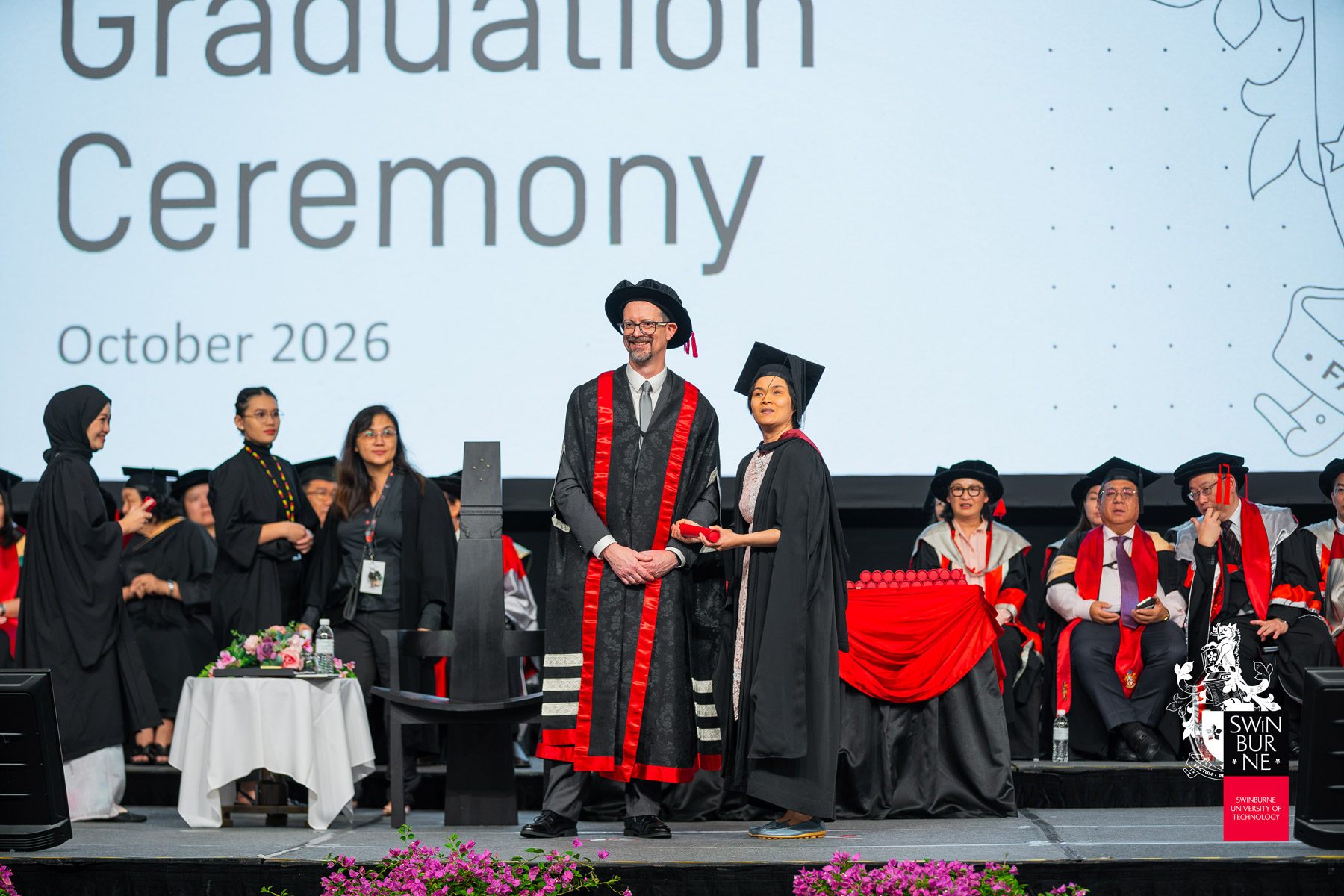
Ruth Yong (centre right) receives her scroll.
She expressed appreciation for the support she received from her lecturers and coursemates, which made a meaningful difference to her learning experience. Although much of her study was remote, interactions through consultations, group work, and other learning activities helped her feel connected to the university community.
“Despite the challenges I face, I have always tried to focus on what I can do rather than what I cannot do. Completing both my undergraduate and postgraduate degrees has reinforced the importance of perseverance, support, and creating accessible opportunities,” she said.
Looking ahead, Ruth hopes to build a career in English language education. Her experience navigating the job market has also strengthened her hope for greater recognition of the contributions people with disabilities can make in the workplace.
“I hope my experience can help cultivate greater awareness that people with disabilities can contribute meaningfully in the workplace when they are given appropriate opportunities and reasonable accessibility support. I would like to continue pursuing my passion for teaching while also encouraging greater inclusion and understanding of people with disabilities,” she said.
Ruth was among 414 graduates who received their scrolls at Swinburne Sarawak’s graduation ceremony on 14 October 2026, celebrating the culmination of their academic journeys and the beginning of new chapters filled with opportunities.
For more information on Swinburne Sarawak, visit its website, Facebook page (@swinburnesarawak), Instagram page (@swinburnesarawak), LinkedIn page (Swinburne University of Technology Sarawak Campus), X page (@Swinburne_Swk), TikTok page (@swinburnesarawak), YouTube channel (Swinburne Sarawak), or Xiaohongshu page (@SwinburneSwk).