

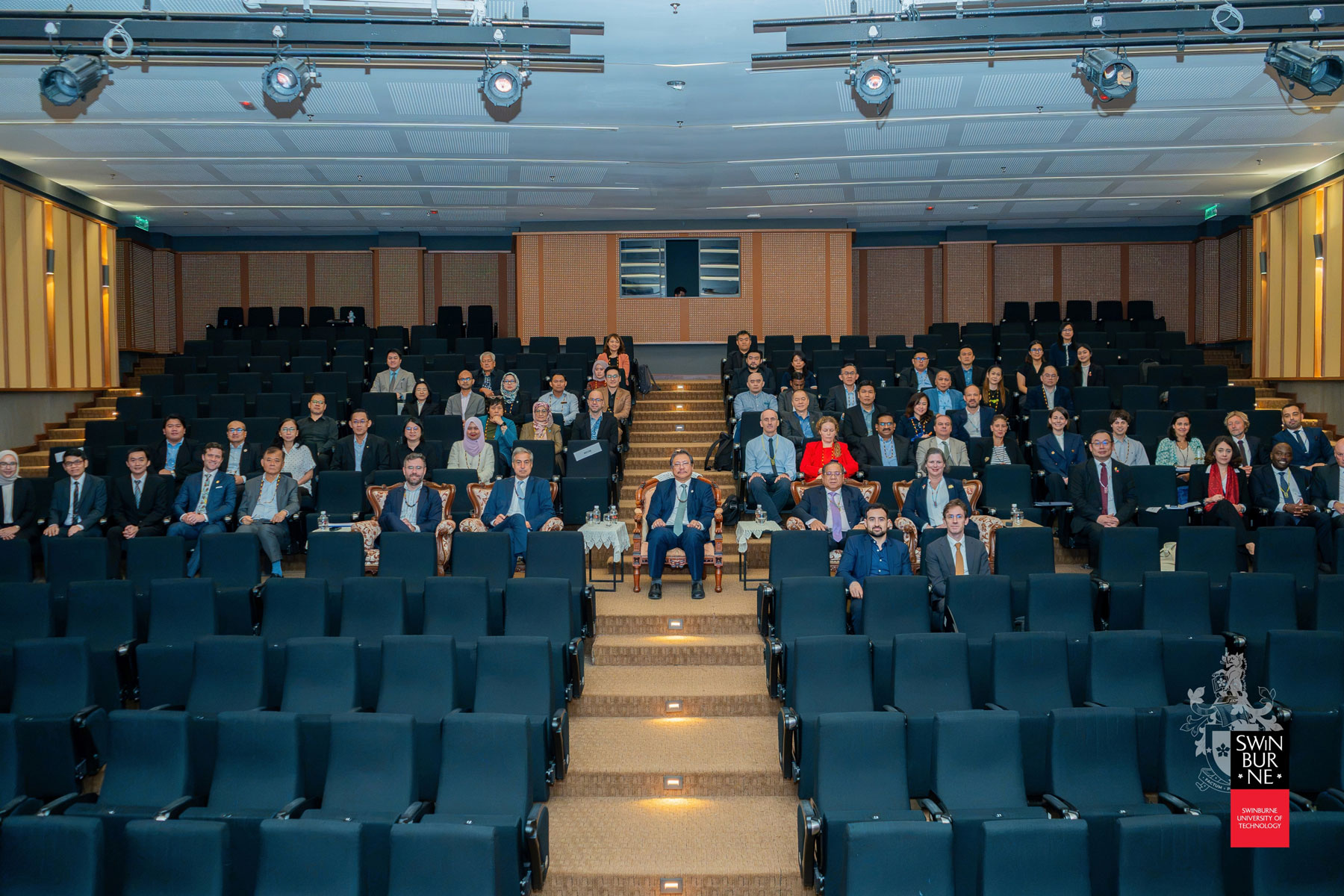
KUCHING – Swinburne University of Technology Sarawak Campus, in strategic partnership with the Franco-Australian Indo-Pacific Centre for Energy Transition (FACET), brought together senior decision-makers, government leaders, energy majors, and diplomatic envoys for the Southeast Asian Symposium on Energy Transition and Security 2026 (SEASETS 2026).
Held on 29 September 2026 at the iconic Borneo Cultures Museum in Kuching, the invitation-only symposium served as a high-level platform bridging Malaysia, Australia, France, and other countries across Southeast Asia to accelerate cross-border energy transition, grid connectivity, and low-carbon industrial value chains.
Designed as a contemporary forum on regional resilience and innovation, the symposium convened energy sector executives, policymakers, and technical experts to explore cross-border logistics, industrial demand, and investment frameworks needed to support the region’s long-term energy transition.
The high-level symposium featured three flagship strategic dialogues focused on regional power grid integration, clean hydrogen and sustainable aviation fuels, and maritime energy transition.
The program was further strengthened by diplomatic keynote addresses from the Australian High Commission and the Embassy of France in Malaysia, highlighting the importance of international partnerships and cooperation in advancing shared energy transition priorities across the region.
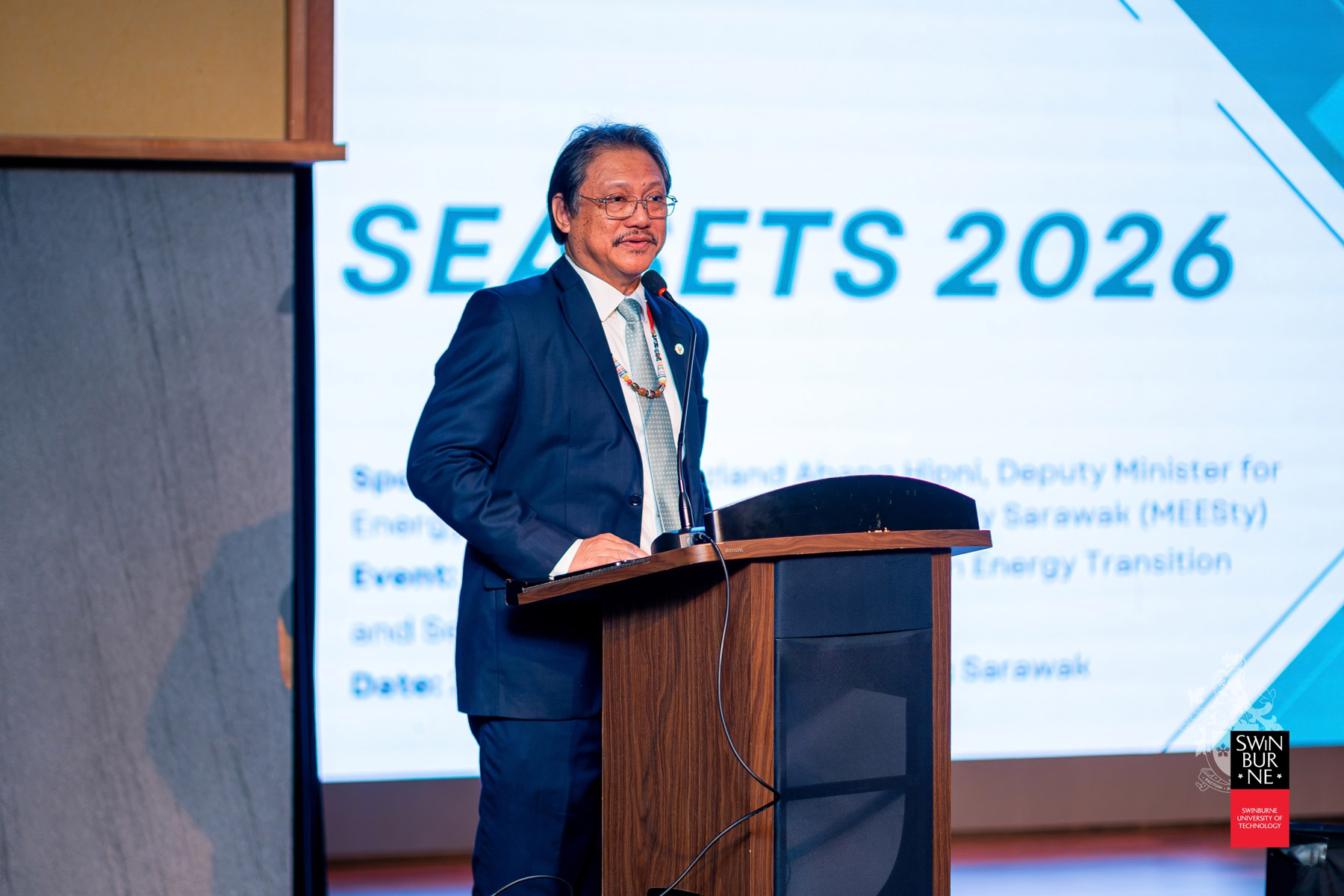
The Honourable Datuk Dr Haji Hazland bin Abang Haji Hipni delivering his speech.
The Honourable Datuk Dr Haji Hazland bin Abang Haji Hipni, Deputy Minister for Energy and Environmental Sustainability Sarawak, officiated the event, underscoring the critical imperative of regional collaboration in realising net-zero targets.
Ir Professor Lau Hieng Ho, Pro Vice-Chancellor and Chief Executive Officer of Swinburne Sarawak, reinforced the university’s commitment to advancing impactful international collaborations.
He highlighted Swinburne Sarawak’s role as a bridge connecting global expertise with state and regional priorities, particularly through its partnership with FACET to establish a recurring international dialogue.
“We believe universities cannot sit comfortably on the sidelines while the world addresses generational challenges around grid decarbonisation, energy security, and climate resilience. Our role is to be an active and agile bridge, connecting global research expertise with local industry adoption and policy frameworks,” he said.
Reflecting on the outcomes, event Co-Chairs Ir Associate Professor Dr Hudyjaya Siswoyo Jo (Director, Centre for Digital Futures, Swinburne Sarawak) and Mr Gordon Chakaodza (Co-Director, FACET) pointed out that SEASETS 2026 goes beyond discussion to lay the groundwork for joint technological roadmaps and cross-border clean energy projects.
For more information on Swinburne Sarawak, visit its website, Facebook page (@swinburnesarawak), Instagram page (@swinburnesarawak), LinkedIn page (Swinburne University of Technology Sarawak Campus), X page (@Swinburne_Swk), TikTok page (@swinburnesarawak), YouTube channel (Swinburne Sarawak), or Xiaohongshu page (@SwinburneSwk).