

On 11 February 2026, the School of Research (SoR) undertook a strategic benchmarking visit to Curtin University Malaysia as part of its continuous efforts to strengthen Higher Degree by Research (HDR) governance, academic quality, and regulatory compliance. The visit served as a platform for institutional dialogue, peer learning, and collaborative exchange of best practices between two Malaysian branch campuses operating under international mother universities.
The Swinburne delegation was led by Ir. Prof. Viknesh Andiappan, Associate Director of SoR. He was accompanied by Ms. Dollyrissia Lainers Debra, Assistant Manager of the Graduate Office, and Ms. Uvaneswari A/P Aripitri, Administrative Officer (Accreditation and MyRA). The delegation was warmly received by Curtin University Malaysia representatives including Prof. John Lau, Deputy Dean of Curtin Malaysia Graduate School (CMGS), Prof. Bridgid Chin Lai Fui, Associate Dean Research and Development (Faculty of Engineering and Science), Dr Tiong Ying Ying, Associate Dean Research and Development (Faculty of Business), Dr Edza Aria Wikurendra, Chair of Research and Development (Faculty of Health Sciences), and Ms Christina Satim, Graduate School Officer, CMGS.
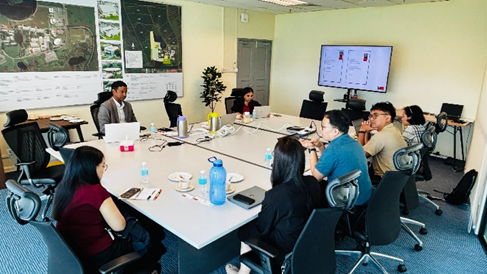
Discussion and exchange of ideas between both institutions.
Emphasis was placed on systematic support mechanisms that scaffold students throughout their candidature journey, ensuring that research outputs meet international academic standards while maintaining strong institutional oversight.
The session on Supervisory and Research Skills Support examined the frameworks in place to ensure effective supervision and research capability development. Both universities discussed training and professional development programmes available for supervisors, including mandatory supervision training, continuous professional development opportunities, and mechanisms for maintaining supervisory quality. The dialogue also explored structured research training frameworks designed for doctoral students, encompassing workshops, seminars, research methodology modules, and other formalised development components. The exchange of practices provided valuable insights into strengthening supervisory capacity and ensuring a consistent, high-quality research experience for HDR candidates.
A significant portion of the discussion centred on HDR Programme Management and Quality Assurance. Both institutions shared their governance structures, including committees, policy frameworks, and clearly defined roles responsible for programme oversight. The conversation addressed mandatory training and development units for both students and academic staff, as well as mechanisms implemented to maintain academic integrity and research quality. Particular attention was given to processes ensuring alignment with the Malaysian Qualifications Agency (MQA), including programme accreditation requirements, internal quality assurance reviews, and ongoing compliance monitoring.
As both Curtin University Malaysia and Swinburne Sarawak hold Self-Accreditation Status under MQA, the benchmarking session provided an especially meaningful platform for dialogue. As private branch campuses attached to international mother campuses, both institutions operate within dual regulatory environments. While institutional standards are guided by their respective main campus, compliance with Malaysian regulatory requirements introduces unique considerations. The session facilitated open discussions on navigating potential gaps between mother campus frameworks and MQA standards, and on strategies adopted to harmonise policies, documentation processes, and academic practices to ensure continued compliance without compromising institutional identity or academic excellence.
Beyond policy and governance discussions, the visit included a comprehensive sharing session on Curtin’s HDR programme operations, offering practical insights into administrative workflows, candidate monitoring processes, and supervisory management systems. The Swinburne delegation also participated in a campus tour, which included visits to the Library facilities, CRISp laboratory facilities, and CARL. The tour provided a broader understanding of the infrastructure and support systems underpinning Curtin’s research ecosystem.
Overall, the benchmarking visit reinforced the importance of collaborative institutional learning in advancing HDR quality and governance. The engagement strengthened professional networks between the two institutions and reaffirmed their shared commitment to maintaining high academic standards, strengthening compliance with national accreditation requirements, and enhancing research excellence within Malaysia’s higher education landscape. Through continued strategic dialogue and benchmarking initiatives, Swinburne Sarawak remains committed to fostering a robust, quality-driven, and internationally aligned HDR ecosystem that supports continuous improvement, innovation, and impactful research outcomes.
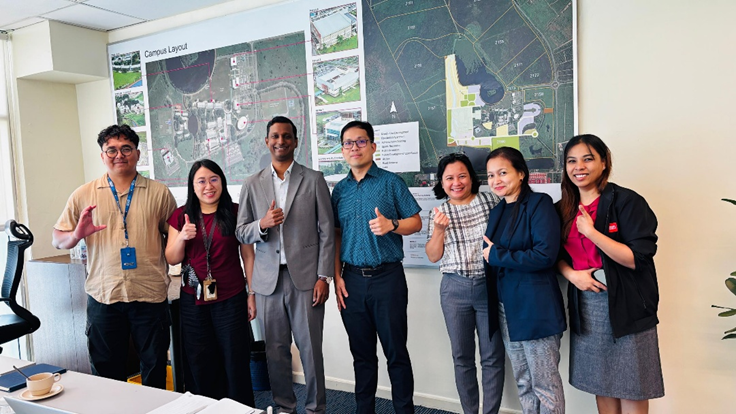
Group photo with Curtin Graduate School (CMGS).