

Knowing how to reference is an essential skill for all students and researchers as it demonstrates academic integrity. You can use referencing to strengthen your arguments and assertions, demonstrate that you have used credible sources, avoid plagiarism by acknowledging your information sources, and make details of source books and articles easily available to interested readers.
The American Psychological Association (APA) referencing style has two parts:
• in-text citations that appear in the body of your work
• a reference list that appears at the end.
Always check with your lecturer that this is the citation style required for your unit.
APA 7th Edition
The latest version of the APA referencing style is the 7th edition. We’ve compiled some handy resources to help you with this referencing style:
APA 7th edition formatting and style guide: in-text citationsIn Text Citation Guideline
Download a printable PDF containing details on how to present referencing in parenthetical and narrative citations.
• Find out more about inserting in-text citations.
APA 7th edition formatting and style guide: reference lists
Textual (documented) work
Download a printable PDF containing an example on how to cite journal, magazine, newspaper, books, reports, conference proceedings, presentations, theses, reviews, unpublished works and etc.
Data Sets, Software and Test
Download a printable PDF containing an example on how to cite data set, computer software, mobile apps, equipment, test, manual and etc.
Audiovisual Media
Download a printable PDF containing an example examples on how to cite films, TV shows, YouTube videos, music, speech recordings, PowerPoint slides, slides, infographic, map, photographs, podcasts, webinars, maps and etc.
Online Media
Download a printable PDF containing an example on how to cite social media, webpages, websites and etc.
Generative AI tools
Download a printable PDF containing an example on how to cite artificial intelligence (AI) models and software such as ChatGPT, Google Bard, QuillBot and etc.
APA 7th Edition reference guide for journal articles, books and edited book chapters
Download a printable PDF containing instructions on how to cite three different resource types in American Psychological Association (APA) 7th edition style.
APA 7th Edition common reference examples guide
Download a printable PDF with examples of the 30 most common reference types formatted in American Psychological Association (APA) 7th edition style.
• Find out more about creating reference lists.
APA 7th edition formatting and style guide: Formatting your APA paper
Formatting APA Paper guideline
Download a printable PDF with step-by-step on formatting an APA paper, creating a hanging indent, using the Format Painter tool in Microsoft Word and Google Docs, and accessing the Academic Writer tool through the library website .
Heading Levels Template: Student Paper
Download a printable PDF.
Sample Students Paper
Download a printable PDF.
• Find out more about creating reference lists.
Additional APA 7th edition referencing guidelines
Act
The manual for APA style, the Publication Manual of the American Psychological Association, does not include referencing examples of Australian legal material.
The reference list examples provided here are based on the Australian Guide to Legal Citation, 4th edition (AGLC4). In-text citations follow the standard APA format.
Jurisdiction (geographic area) is abbreviated: Commonwealth (Cth), Victoria (Vic), New South Wales (NSW), Tasmania (Tas), Queensland (Qld), South Australia (SA), Western Australia (WA), Northern Territory (NT), Australian Capital Territory (ACT).
When a resource (such as an act, bill, etc.) has a short and long title, cite the short title.
Act
In-text citation
Short title of the legislation (in italics), year (in italics), jurisdiction (abbreviated), subdivision number (if relevant). Specify the jurisdiction in the first citation but it is not required in subsequent citations.
For example:
In the Victorian mental health system advance statements can be made to document an individual’s treatment preferences in the event they become a patient (Mental Health Act 2014 (Vic), s. 28).
Reference list
Short title of the act (in italics), year (in italics), jurisdiction (abbreviated), URL (if retrieved from a website)
For example:
Mental Health Act 2014 (Vic)
Bill
Bills are treated as unpublished works and the title is not italicised.
In-text citation
Short title of the bill, year, jurisdiction (abbreviated), subdivision number (if relevant)
For example:
As outlined in the Liability for Climate Change Commonwealth Bill (2020, s. 15).
Reference list
Short title of the bill, year, jurisdiction (abbreviated), section or paragraph number (if relevant).
For example:
Liability for Climate Change Bill 2020 (Cth).
Legal Case
Legal cases can be organised by volume number or by year. Round brackets enclose the year of reports organised by volume numbers. Square brackets enclose the year of cases organised by year. Check the source you used to ensure your brackets match.
In-text citation
Title of the case (in italics), year (in brackets). Specify the year in the first citation but it is not required in subsequent citations.
For example:
Furthermore, in the case of Breen v Williams (1999), this was disputed.
Reference list
Title of the case (in italics), year (in brackets), volume number, law report abbreviation.
For example:
- Breen v Williams (1999) 186 CLR
- Mokbel v The King [2025] VSCA 243
Image reproduces in a document
Please note:
Figure
The components of a figure are:
- Number: The figure number (e.g. Figure 1) appears above the figure in bold.
- Title: The figure title appears one double-spaced line below the figure number, in italics and capitalised
- Image
- Legend (only relevant if reproducing a chart or other image containing symbols that need to be explained)
- Note: This appears below the figure, and the purpose is to describe the contents of the figure that cannot be understood from the figure title or image. This is also where the copyright attribution is placed. A reproduced or adapted image requires a copyright attribution.
1. Authors intending to publish their work (including theses) must, before publication, obtain permission from the copyright owner or comply with any stated licensing conditions (such as a Creative Commons license).
2. Students using images in assignments submitted as part of their course do not need to ask permission from the copyright owner under Fair Dealing for Research or Study in Australian copyright law. However, “fair dealing” does not apply if the images are made available to anyone outside the course of study. This includes sharing your work (if the images are included) online or with potential employers. Otherwise you will need to obtain the copyright owner’s permission or omit the images.
Referencing a reprinted image when permission is not necessary
In the body of the paper, for example:
Figure 1 shows the highly ornate…
Figure 1
Springthorpe Memorial
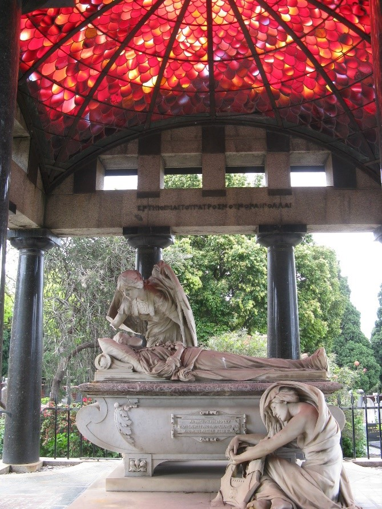
Note: From Cemetery Architecture of Australia by D. Eade, 2020, p.18. Copyright by Art Architecture Books.
Reference list
Eade, D. (2020). Cemetery architecture of Australia. Art Architecture Books.
Referencing an image when permission to reproduce it has been obtained from the copyright holder
For example:
The ceiling of the Springthorpe Memorial, as seen in Figure 2, provides a colourful contrast to the sober, neoclassical elements of the building.
Figure 2
Stained Glass Ceiling, Springthorpe Memorial
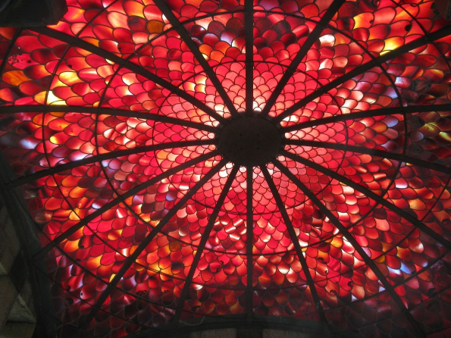
Note. Reprinted from Stained Glass Ceilings in Australian Architecture, by A. B. Light, 2018, (http://ahas.org.au/stainedglassceilings_image1). Copyright 2020 by Australian Historic Architecture Society. Reprinted with permission.
Reference list
Light, A. B. (2018). Stained glass ceilings in Australian architecture. Australian Historic Architecture Society. http://ahas.org.au/stainedglassceilings_image1
Referencing an image you created yourself (i.e. your own work) such as photograph
A figure or image created by you, and reproduced in your paper, would not need a figure note as no copyright attribution would be required. However, if the image requires more description or explanation than that provided by the title, you may wish to include a figure note. No reference list entry is required.
Please note that an exception to this is where an author seeking to publish wishes to use an image they created that has already been published as the copyright may now reside with the publisher (see the note for Figure 1).
For further information, go to the Academic Writer database, or check out APA’s webpage Figure setup.
Image not reproduced in your work
In-text citation
Images of Cathy Freeman’s distinctive, green and gold, running suit (Munday 2000), worn at the Sydney Olympics in 2000…
Reference list
Munday, S. (2000). [Photograph of Cathy Freeman at the Olympic Games Sydney
2000]. International Olympic Committee. https://stillmed.olympic.org/2018-08-
15-Freeman.jpg

Swinburne Design students
For example:
As demonstrated in Figure 1, cemetery architecture at that time…
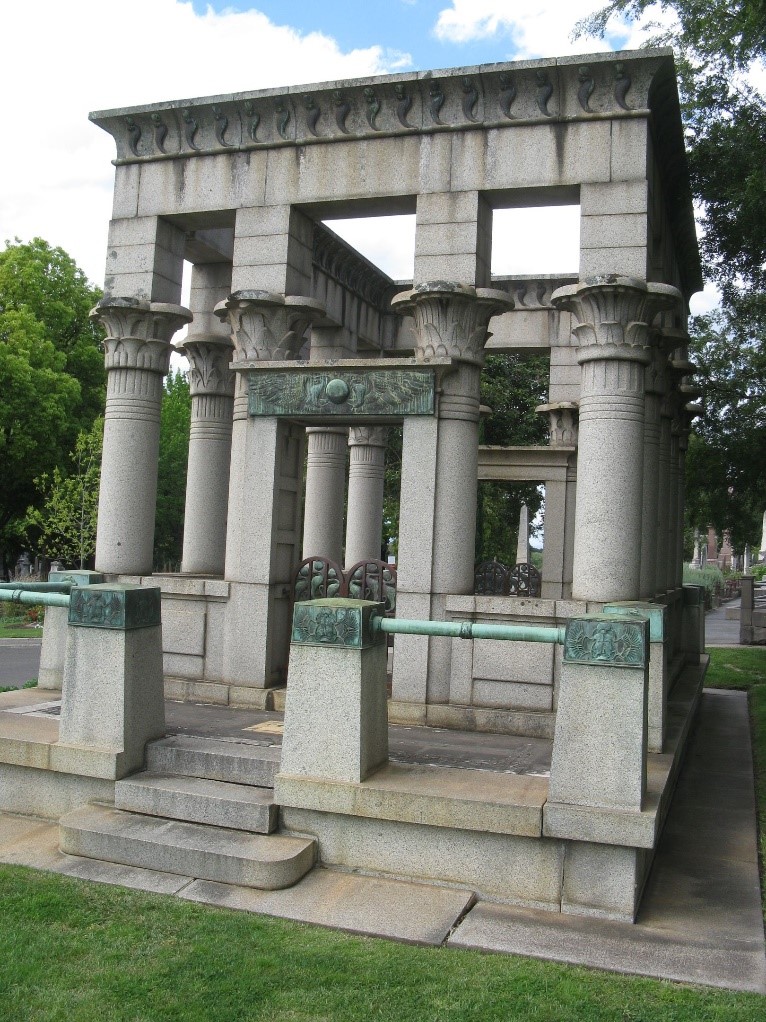
Figure 1. Syme Memorial. Reprinted from “Edwardian Melbourne and Cemetery Architecture,” by J. J. Lintel, A. Corbel, and P. T. Rafter, 2019, Cemetery Art and Architecture, 20(1), p.5 (https://doi.org/10.1030/yho0000359). Copyright 2019 by Doodle, Quiff & Co.
Reference list
Lintel, J. J., Corbel, A., & Rafter, P. T. (2019). Edwardian Melbourne and cemetery
architecture. Cemetery Art and Architecture, 20(1), 5-15,
https://doi.org/10.1030/yho0000359
- Need more help? Try the APA Style blog.
APA 7th edition referencing style: A brief introduction
This video is a beginner’s guide to the APA (American Psychological Association) 7th edition referencing style including in-text citations and reference lists.
APA 7th edition referencing style: A brief introduction
APA 7th edition referencing style: A brief introduction. [9:06]
Academic Writer
With 100 per cent coverage of the official APA 7th edition style manual, this tool provides many examples of correct referencing for a wide variety of reference types. It can also enable you to save and store references, and help you to write documents in APA format. To quickly find referencing help in Academic Writer, select the Learn Centre and click Sample References.
Try it now .